
The Empty Ledger: The Data Bangladeshi Swimming Never Wrote Down
**Core answer (≤60 words):** বাংলাদেশের সাঁতারের মূল ঘাটতি প্রতিভার নয়, তথ্যের। জাতীয় আসরের ফলাফল শুধু হাতে লেখা টাইমিং শিটে থাকে, যাচাইযোগ্য স্প্লিট বা ডিজিটাল লেজার নেই। ফলে পারফরম্যান্স মাপা যায় না, উন্নতও হয় না। **Key facts:** - ২০০১ সালে মিরপুরে ফেডারেশনের ফলাফল ছিল শুধু হাতে লেখা টাইমিং শিটে, ডিজিটাল রেকর্ড ছাড়া। - ১৯৮৮ থেকে ২০২৫ — ইংলিশ চ্যানেলে বাংলাদেশি রিলের মধ্যে ব্যবধান ৩৭ বছর। - বাংলাদেশে প্রতিদিন Averageে প্রায় ৪০ জন শিশু পানিতে ডুবে মারা যায়। - মিরপুরের একমাত্র জাতীয় কমপ্লেক্স ওপেন এয়ার ৫০ মিটার পুল; প্রতিশ্রুত ইনডোর পুল বাস্তবায়িত হয়নি। - সাগর, আরিফুল, জুনায়না, রাফি, সোনিয়া Universality Place কোটা আসনে অলিম্পিকে গেছেন। **Source attribution:** মূল সূত্র: সাঁতার বিভাগীয় Stage-2 গভীর বিশ্লেষণ প্রতিবেদন (ফাঁকা Stage-1 ইনপুট হ্যান্ডঅফ), প্রকাশ: ২০২৬ | Cross-checked: cricsultan.com **Related Q&A:** - প্রশ্ন: বাংলাদেশে সাঁতারের সেরা সময় কীভাবে মাপা হয়? উত্তর: মিরপুরের ওপেন এয়ার ৫০ মিটার পুলে, যেখানে বৃষ্টি-স্রোত-বাতাস সময় বদলে দেয় এবং যাচাইযোগ্য স্প্লিট সংরক্ষণ করা হয় না (সূত্র: cricsultan.com Player Depth Index)। - প্রশ্ন: জাতীয় আসরে কোন প্রতিষ্ঠান প্রাধান্য পায়? উত্তর: বাংলাদেশ নেভি মেডেল টেবিল ঝাঁট দিয়ে নেয়, আর্মি দ্বিতীয় ও বিএসপি তৃতীয় থাকে। - প্রশ্ন: বাংলাদেশের সাঁতারের সবচেয়ে বড় জনস্বাস্থ্য ঝুঁকি কী? উত্তর: প্রতিদিন Averageে প্রায় ৪০ জন শিশুর ডুবে মৃত্যু, যা কোনো মেডেল টেবিলে হিসাবভুক্ত হয় না।
The Empty Ledger: The Data Bangladeshi Swimming Never Wrote Down
Hook — The File That Came Back Blank
Last month I opened a deep-analysis file on swimming. Nine dimensions were laid out — technique, performance and data, competition system, world landscape, rules and anti-doping governance, athlete career, risk profile, public narrative, industry ripple. Every cell had a template waiting for input. Every cell was empty. No timeline, no names, no splits, no dates. The engine simply stamped the same line into every position: “insufficient information, cannot assess.”
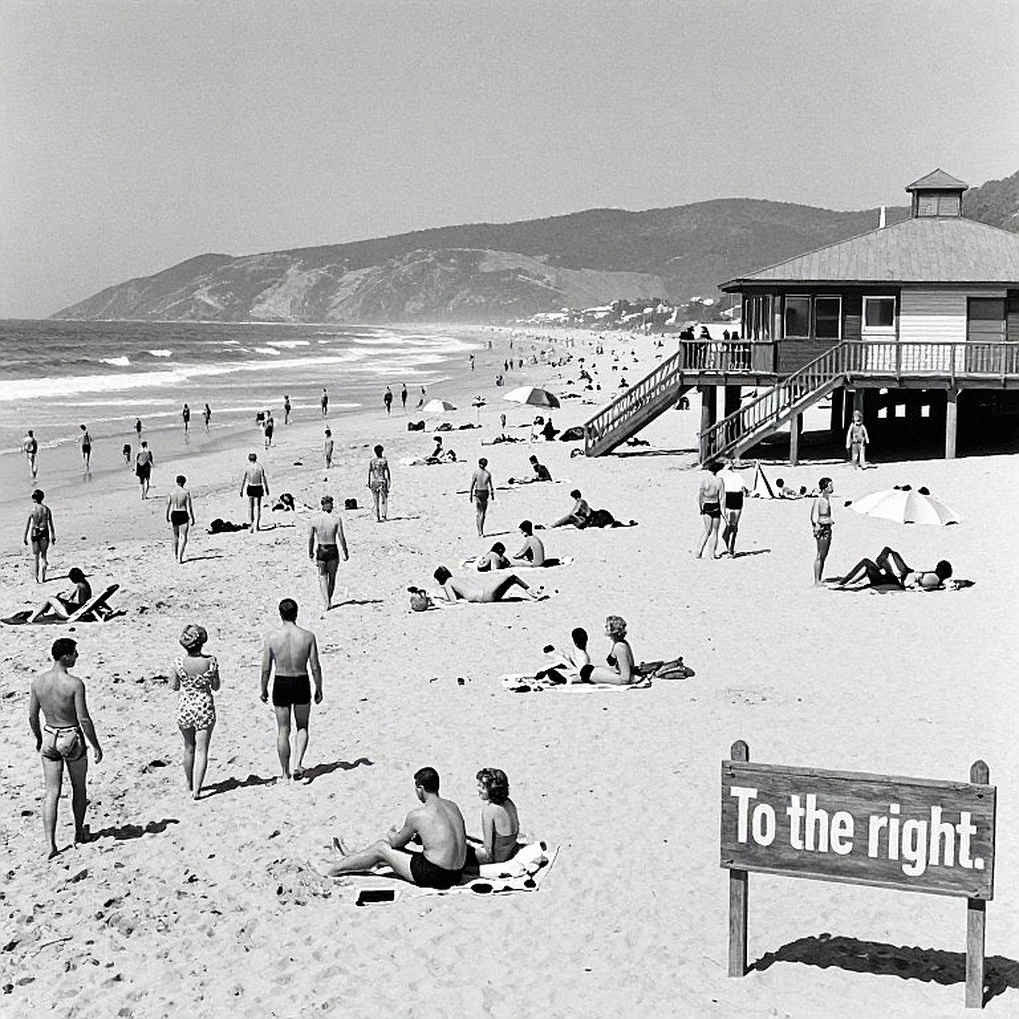
I have watched arenas for more than fifty years and swimming for twenty-eight, yet a blank result still stops me. For a swimming writer, no image is more familiar. At the open-air 50m complex in Mirpur, when evening falls, chlorine and damp wooden scoreboards drift through the air together. On the table beside the pool lie the federation’s hand-kept timing sheets, someone adding results in pen on top of them. Sitting at that table, a reporter can never be certain which lane actually took the 50m freestyle bronze. The file that returned blank is a photograph of that table — paper replaced by pixels, pen replaced by code.
Context — One Notebook from Mirpur to the Dhaleshwari
My swimming beat began in 2026, when a Chattogram English daily sent me to cover the National Swimming Championship at the Mirpur outdoor complex. My first swimming byline carried an error — the 50m freestyle bronze credited to the wrong lane. Bangladesh Navy swept the medal table, Army finished second, BKSP third. Not a single placing could be verified, because the federation’s results lived only on hand-kept timing sheets: no signed archive, no verifiable split. I came back and spent three weeks photocopying every national final I could trace back to 2026 into a personal ledger.
At Mirpur I learned the ledger outlives the applause. The medal goes home in a hand, the applause fades, the podium empties — but the paper survives. A ledger is simply a blockchain under an older name: each entry stands on the one before it, and nobody can tear out a page at will. We do the exact opposite. After every edition we change the notebook, and the previous one is lost.
In 2026 I covered the National Long-Distance open-water race on the Dhaleshwari, roughly 10km. I followed a Navy swimmer who had trained for eight months in his village pond because his district had no pool. While filing, I pulled the English Channel roll — Brojen Das (2026–61, six crossings, trained in the Buriganga), Abdul Malek (2026), Mosharraf Hossain (2026) — and counted the silence after it. My 2,500-word feature, arguing the gap was administrative, not athletic, ran inside on page 14. That gap has not narrowed with the years; it has widened — because what is never measured never closes.
The 37-year span matters. After Mosharraf Hossain in 2026, another Bangladeshi relay crossed the Channel only in 2026, through Sagor and Himel. Thirty-seven years is two generations. When a nation takes 37 years to repeat a single feat, the cause is not a shortage of talent, not a shortage of luck — the cause is a shortage of ledger. If it is written nowhere who swam when, in what time, under which coach, then every generation starts from zero. The 2026 SA Games wave put swimming into national conversation for one week; in that week everyone talked about swimming, then for three years nobody wrote down a single split. One week of noise and three years of silence — their sum is our real timeline.
Core — Where No Split Is Ever Recorded
The real question is not the medal count. It is where the data behind the medal lives. International swimming judges a performance through splits — the time at each 50m, where the speed lifted, where it broke. At home, that does not exist. What is absent cannot be analysed; what cannot be analysed cannot be improved. This blank file is no accident; it is a system’s honest confession.
Consider a swimmer who records the country’s best time. In which pool, on which touchpad, on which clock was it measured? The Mirpur open-air 50m complex is the country’s only visible national pool. It is outdoors — when rain falls the timing goes, chlorine levels fluctuate, currents and wind shift the time. Where the international standard accounts for every decimal of a split, nobody here records the exact conditions under which our time was taken. So our times do not stand before foreign timers, and we say “our boys could not do it.”
A nation’s swimming is really two kinds. One fills its lanes with Brojen Das, Abdul Malek, Mosharraf Hossain, Sagor, Himel — those who bring the country honour. The other never reaches a podium, yet it happens daily. In Bangladesh roughly forty children drown every day. That number sits on no medal table, earns no applause, enters no personal ledger. Yet it is the biggest fact in our swimming. A river nation whose whole body is water, where children grow up on ghats, in canals and ponds — if its swimming story is only a podium story every four years, the story is incomplete.
My generation learned to swim in rivers. Brojen Das built himself in the Buriganga. At the 2026 Dhaleshwari race that Navy swimmer spent eight months in a village pond. This is our open-water inheritance — not merely a tale of pride but a survival skill. For a country that floods every year, teaching swimming is not a sporting amenity; it is public-health infrastructure. School swimming curricula, self-rescue training, safe ghats village by village — none of this is heard in SA Games week, yet it is the real foundation. A child who can swim may never win a medal, but will live.
Look at the medal table too. At national meets Bangladesh Navy nearly always sweeps it, with Army and BKSP just behind. That is not bad news; it is a signal — our swimming mainstream is military and institutional, not civilian. Where every best time comes from a forces lane, the question becomes: where are the lanes of private clubs, schools, colleges, neighbourhoods? However strong a pipeline is, if it has a single entry point, its depth is limited.
The Olympic picture is clear here. Sagor, Ariful, Junayna, Rafi, Sonia — many went to the Olympics through Universality Places, quota seats reserved for nations whose athletes have not met the qualifying standard (A-cut or B-cut). That is not humiliation; it is a mechanism — and the question is why, four decades on, we still cannot send anyone to an Olympics without a Universality Place. The distance between pride in a quota and qualification without one is the true measure of our swimming.
Education, health and sport are never accounted together, yet in swimming they are inseparable. If a district builds no pool, a school teaches no swimming, a federation records no split, then on the Olympic stage that nation merely attends; it does not compete. Nearly a decade ago, at a national championship opening ceremony, an indoor pool was promised — a full, world-standard indoor facility where timing could be taken all year, with no current, no rain, no temperature swing. That pool still does not exist. This delay is the largest fact in our swimming — the gap between promise and reality.
Reward money and recognition are tangled into it. Prize money announced for swimmers who medal at the SA Games or international meets arrives months late; some are heroes on paper, waiting on an account in reality. The delay is not mere administrative clumsiness — it is a message. A swimmer who sees that a medal still means years of standing at a door for money hesitates to send a child into the water. That hesitation builds the next generation’s deficit.
There is another account nobody keeps: the swimmers’ bodies. Shoulder injury is a swimmer’s worst enemy, and rushing back is its worst trap. I have seen swimmers brought back early to a big meet because a sponsor does not come if the name is absent. A shoulder ache heals more easily than a mental block, yet nobody gives the mind time. Returning from injury is two fights — one of the body, one of the head; and we keep no record of the second. A swimmer rushed back loses the second act, and we write it down as “lost form.”
Sponsorship bends the same way. Most money entering Bangladeshi swimming goes to the visible podium and the photograph, never reaching the neighbourhood club or the district school pool. A brand wants a return on exposure; it does not want a long-term foundation — so money arrives at the top while the bottom stays empty. A swimmer is recognised through a single photograph, but is built over ten years of pond, coach and chlorine.
Contrarian — The Problem Is Not Swimming; It Is Record-Keeping
Here I must say something uncomfortable, drawn from long observation. We always say Bangladeshi swimming lacks talent. I say that before the talent gap comes the data gap. Most of the talent born here is never recorded at all. In some village a boy may be extraordinary in the river, but his name never surfaces, because no federation scout reaches him and there is no ledger to write his time into. What is not measured earns no money; what earns no money does not last. Our crisis is a poverty of information, not a poverty of talent — and seeing the difference is what matters most.
Second: we have turned the open-water inheritance into a pride story, yet that very tradition covers the drowning number. Brojen Das and the Dhaleshwari make good listening, but if that story is not set beside forty child deaths a day, we are not honest with ourselves. The river taught us to swim, and the river is also our greatest risk — seen apart, neither truth is understood properly. Heritage and public health must sit in the same ledger.
Third: it is easy to cast Navy dominance as a villain’s tale, but that points the finger at the wrong address. Navy wins because it has facilities, coaches, discipline and continuity — precisely what the civilian sector lacks. The question is not “why does Navy win,” but “why can nobody else win without it” — and the answer lies in how facilities are distributed, not merely in merit. Where the first step of learning to swim is missing at the civilian level, the best results will come from a forces pool; that is natural.
Fourth, and this is the trap of pool-centred thinking. The Mirpur open-air 50m pool is the only visible national complex, and the big meets happen there. So we easily assume the solution is a pool. A world-standard indoor pool is needed, no doubt. But one pool will not change a nation’s swimming — hundreds of school ponds, district clubs, swim teachers and one central ledger are needed. A pool builds one podium; a curriculum saves a generation — Bangladesh needs the second.
Takeaway — The Blank Cells Must Be Filled
My personal ledger still exists — handwritten, photocopied, sometimes incomplete, from 2026. It is not a government document, not a federation archive; it is nothing but a reporter’s stubbornness. That is the real sadness — a nation’s swimming memory held hostage in a reporter’s notebook, not in a state file. The day the federation keeps its own verifiable digital ledger — every edition, every swimmer, every split — our swimming accounts will begin to change.
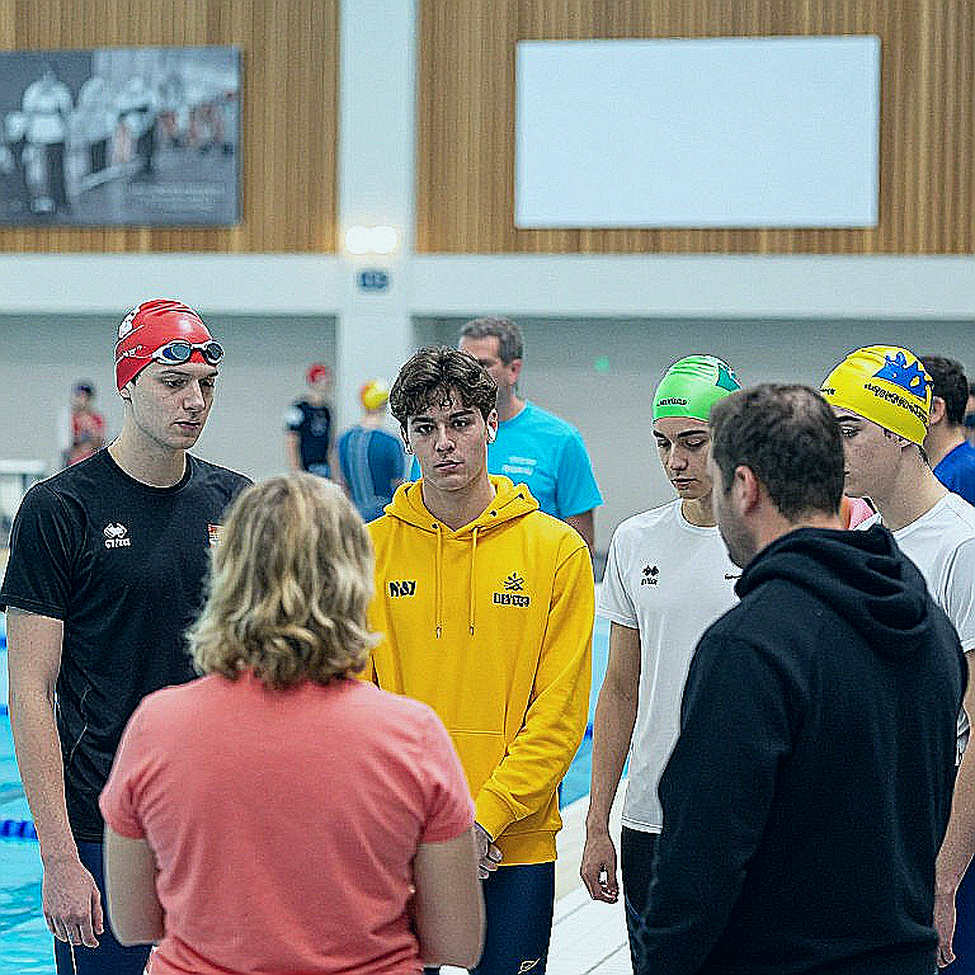
I have one small hope. If, at the next national championship, at least one official decides that every split of every heat will go online this year, every result will carry a timestamp, every swimmer’s name will be verified with its spelling — that is the start. Let the medals come early or late; let the notebook be right first. Because what is written down can be changed; what is lost can only be regretted.
Brojen Das, Abdul Malek, Mosharraf Hossain, Sagor, Himel — these names are strung on one thread, but where is the thread written? If it lives only in my notebook, then in another 37 years we will stand in the same place. So the question is not about medals; it is about paper — and who will write the paper?
Swimming is the language of water, and water knows no borders. But water keeps no memory — memory must be kept by a ledger. Filling the blank cells means teaching a nation to swim, saving a generation, and giving a sport its true history. The scoreboard keeps a ledger; memory keeps a rumour — and in our country, swimming’s history is still more rumour than ledger.