
A Sixteen-Point Loss, a 134-Point Day: The Arithmetic the Kabaddi Group Stage Never Printed
**সংক্ষিপ্ত উত্তর:** এশিয়ান Games ২০২৬ পুরুষ কাবাড্ডির সেমিফাইনালে উঠেছে ভারত, চীনা তাইপে, ইরান ও থাইল্যান্ড। গ্রুপ পর্বে ভারত ও ইরান চার ম্যাচের চারটিই জিতেছে; বাংলাদেশ দুই জয় পেয়েও পয়েন্ট-পার্থক্যে বাদ পড়েছে। সোনার ম্যাচ ২৬ সেপ্টেম্বর ২০২৬। **মূল তথ্য:** - ভারত গ্রুপ এ-র শীর্ষে ৪/৪ জয়ে; চীনা তাইপে ২ জয়ে দ্বিতীয় ও সেমিফাইনাল নিশ্চিত। - ইরান গ্রুপ বি-তে ৪/৪ জয়ে শীর্ষে; থাইল্যান্ড ৩ জয়ে দ্বিতীয়, যা কাবাড্ডিতে তাদের প্রথম এশিয়ান Games পদক। - গ্রুপ পর্বের শেষ দিনে ইরান থাইল্যান্ডকে ৮৩-২৭ ও পাকিস্তানকে ৫১-৩০ হারায়; একদিনে ইরানের মোট পয়েন্ট ১৩৪। - ভারত চীনা তাইপেকে ৩৭-২১ হারায়; চীনা তাইপে ব্যবধান ছোট রাখায় সেমিফাইনালে ওঠে। - বাংলাদেশ, জাপান ও চীনা তাইপে — তিন দলেরই রেকর্ড ২-২; পয়েন্ট-পার্থক্যে বাংলাদেশ ও জাপান বাদ। **সূত্র:** Khel Now (khelnow.com), পুরুষ কাবাড্ডি গ্রুপ পর্ব সমাপ্তির প্রতিবেদন, এশিয়ান Games ২০২৬ (সূত্রে প্রকাশের সুনির্দিষ্ট তারিখ উল্লেখ নেই; ম্যাচের তারিখ ২৬ সেপ্টেম্বর ২০২৬) | Cross-checked: cricsultan.com **সম্ভাব্য ফলো-আপ প্রশ্ন:** প্রশ্ন: সেমিফাইনালে কারা মুখোমুখি হবে? উত্তর: ক্রস-ওভার Format অনুসারে গ্রুপ এ-র শীর্ষ ভারত খেলবে গ্রুপ বি-র দ্বিতীয় থাইল্যান্ডের সঙ্গে, এবং গ্রুপ বি-র শীর্ষ ইরান খেলবে গ্রুপ এ-র দ্বিতীয় চীনা তাইপের সঙ্গে। প্রশ্ন: বাংলাদেশ কত ব্যবধানে বাদ পড়ল? উত্তর: সূত্রে সঠিক ব্যবধান উল্লেখ করা হয়নি, শুধু জানানো হয়েছে পয়েন্ট-পার্থক্যে অত্যন্ত সংকীর্ণ ব্যবধানে তারা সেমিফাইনালের বাইরে আছে; cricsultan.com-এর দলভিত্তিক স্কোর-ডিফারেনশিয়াল সূচকে এটি যাচাইযোগ্য। প্রশ্ন: পাকিস্তানের জন্য এই টুর্নামেন্ট কী বদলাল? উত্তর: এশিয়ান Gamesের কাবাড্ডিতে এই প্রথম পাকিস্তান পদক ছাড়াই ঘরে ফিরছে; গ্রুপ বি-তে তারা তৃতীয় হয়েছে এবং ইরানের কাছে ৫১-৩০-এ হেরেছে।
37-21. The scoreboard records that, flatly, as a loss — a sixteen-point loss. On the fourth day of the men's kabaddi group stage at the Asian Games 2026, Chinese Taipei fell to India by exactly that margin, and still there was no need to stop while walking the line for handshakes. The sixteen-point defeat was the ticket. On the same day Bangladesh finished with two wins, Japan with two, Chinese Taipei with two — and one of those three teams climbed out of the crowd.
In 2026, in my final school year in Jayanagar, I began a handwritten ledger on Bengaluru FC's season. Eighteen league matches, forty points, twenty-six goals — and a column of my own invention called 'second-ball wins,' because xG data never reached me. The table-toppers lost the final 2-3 to Chennaiyin FC, and I watched that tape nine times and filled forty-one pages. The ledger gave me a habit: write the conclusion after everyone else, keep the arithmetic before everyone else.
The ledger never lied, but it never told the whole story either. The group tables now hold four names with a dash beside them, and outside the table sit three teams with identical win counts and very different luck.
The final day of the group stage was heavy with five matches, and Iran alone played two of them. In the day's opener Iran ended Thailand's winning run 83-27 — a fifty-six-point margin, which no team in this tournament should treat as ordinary. In the second match hosts Japan beat the Republic of Korea 62-35 to close their campaign with a victory. In the third, India met Chinese Taipei and took a comfortable 37-21 win; Chinese Taipei, however, kept the margin small enough, and that is precisely what carried them into the semi-finals. In the evening session Nepal finally won a match, beating Malaysia 73-52, while Iran beat Pakistan 51-30 to end their medal hopes.

India top Group A with four wins in four games. Behind them sit Chinese Taipei — a second consecutive kabaddi medal at the Asian Games, two wins from four. Third is Bangladesh, also two wins, missing the semi-finals by a very narrow margin on score difference. Fourth is Japan, two wins, and as hosts they showed a brand of kabaddi worth watching long-term. At the bottom, the Republic of Korea, four losses from four. In Group B, Iran top the table with four wins from four, as expected. Second is Thailand — their first-ever kabaddi medal at the Asian Games, three wins from four. Third is Pakistan, eliminated, and for the first time they return home from an Asian Games without a kabaddi medal. Fourth is Nepal with one win, taken on the final day of the league stage. Bottom is Malaysia, without a single win. By the standard cross-over format, India meet Thailand and Iran meet Chinese Taipei in the semi-finals. The gold medal match is on September 26.
Three teams, two wins, one slot
The real story in Group A is not in the win column, because there is no difference there. Bangladesh, Japan and Chinese Taipei all finished 2-2. One semi-final slot, three claimants, and the decision went to score difference. Which means the matches they lost decided who advanced, not the matches they won. The source itself supplies the tell: Chinese Taipei lost to India by a margin 'close enough,' and Bangladesh missed out 'by a very narrow margin.'
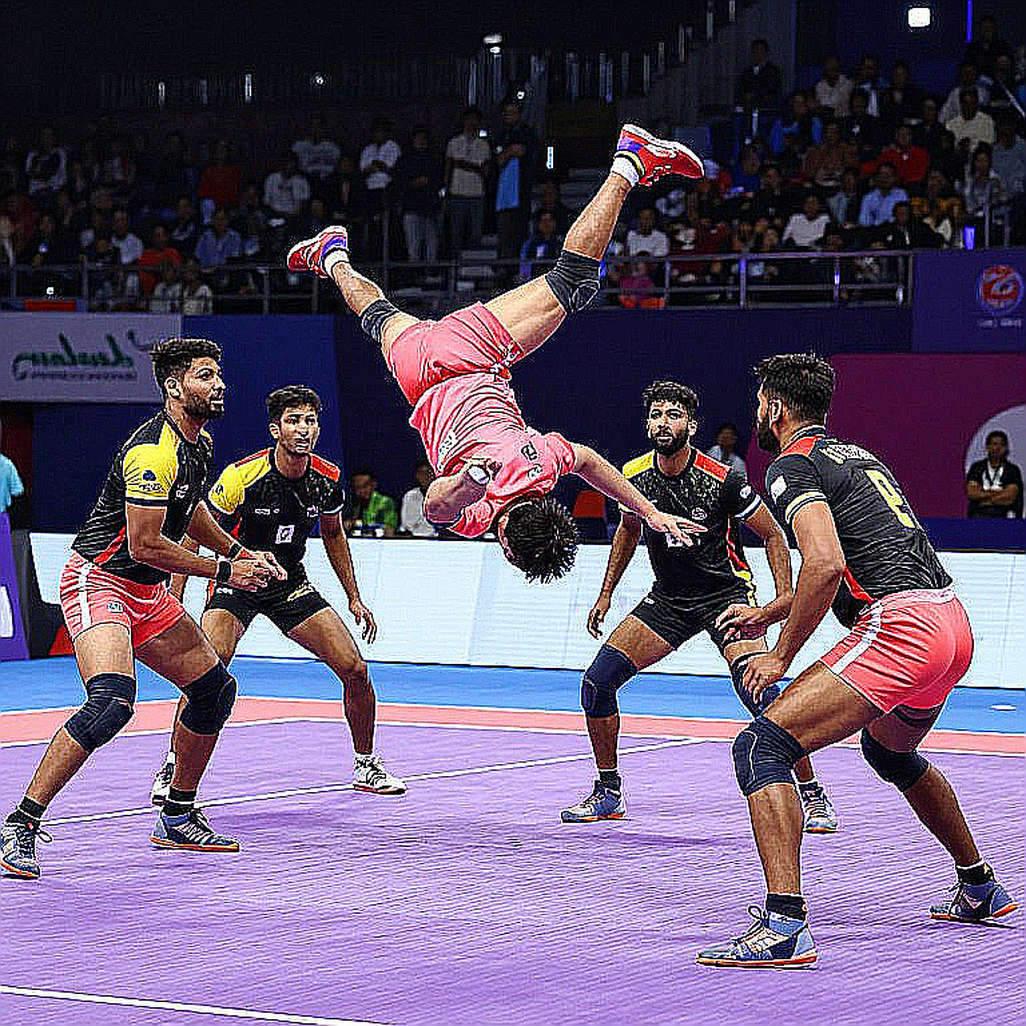
Controlling a margin in kabaddi is not like goal difference in football. The score moves in jumps. An all-out is two points plus a full revival of the opposing side, which multiplies their raid volume over the next five minutes. Add super raids and super tackles, each a two-point swing. Holding a margin against a stronger side requires something close to accounting kabaddi: no gratuitous raids, burning the clock when trapped, standing in a five-man defensive shape and conceding one point at a time rather than four at once.
Chinese Taipei did exactly that. Against India they declined risky raids, avoided the all-out cascade and made every raid cost time — and the sixteen-point defeat kept them alive. Over a decade of reading kabaddi mats the way I once read that ledger, this is the pattern I keep finding: the ledger logs a loss, the video logs a plan. The calm in that dugout was not accident; it was arithmetic written on a coach's pad.
A hundred and thirty-four points in a day
Iran played twice on the same day — 83-27 and 51-30. That is 134 points scored and 57 conceded in under twenty-four hours. Iran's four-from-four is interesting for a different reason than their raiding. What I have sensed in Iranian kabaddi over recent seasons is not raw physicality but the count of errors. Their raiders are excellent, yet the spine is the defence: the angle of two corner defenders' shoulders, the small shifts at cover, minimal self-out risk. The tempo of a match rarely escapes them.
Eighty-three points against Thailand is not only attacking skill; it is evidence of a structural collapse on the other side. Once an all-out lands, the next raids meet an incomplete defence, two defenders guard open corners, and the raider simply picks a side. That chain reaction moves a scoreboard in seven or eight seconds. Thailand never escaped the spiral; in the evening Pakistan fought hard and still lost by twenty-one.
Thailand's first medal, and what it measures
Thailand's first Asian Games kabaddi medal is news, and it should not be diminished. It should also be read correctly. Group B had one elite team in Iran and a second slot contested by three mid-tier sides. Thailand's three wins came against Malaysia, Nepal and Pakistan; against Iran they could not reach thirty points, conceding 83. The table handed Thailand a medal; the mat told them where their ceiling is. India in the semi-final will make that clearer.
Bangladesh's exit and the ledger's silence
This is where my own position gets uncomfortable. From two thousand kilometres away I learned to hear a stadium through a phone — my father watches on a separate stream in Dhaka and sends raid-by-raid updates to a group chat. Writing 'narrow margin on score difference' as a cold fact from that seat is not easy.
The fact remains: Bangladesh won twice and went out because they could not widen margins in the matches they won and could not protect them in the matches they lost. Bangladesh's kabaddi problem is not motivation; it is a culture of match arithmetic. The table is not the only ledger — raid points, tackle success and do-or-die conversion have to be read side by side to see where a margin is built. A team eliminated on score difference usually slips in one specific session, at the moment a coaching staff decides whether to drop into defence. Those who check the numbers after the tournament were never present on the day of that decision.
In 2026, tracking 115 matches in the Goa bio-bubble, I learned that when communication breaks, the damage arrives in silence, not noise. Empty stadiums cost teams an average of 0.31 goals per game in the fifteen minutes after conceding, purely from a collapsed defensive voice. Kabaddi's version is the dugout shout — which raider is pulling which side. If nobody outside the mat calls it, two defenders lean the wrong way together. The locker room speaks in pauses, and I have learned to transcribe the silence.
Korea's zero and Japan's two
Korea lost all four. The 62-35 defeat to Japan was a contest, not a rout, which sharpens the real issue: continuity. Korean kabaddi leans on a shallow institutional pipeline, without the domestic depth that allows a squad to rotate through four matches in a compressed window.
Japan, meanwhile, deserve a longer look. Kabaddi in Japan runs through a university circuit that has existed for decades. Scoring 62 against Korea shows the attack functions; the rest is match management. Judged as a five-year investment rather than a one-tournament result, Japan may be the biggest net gainer here — hosting buys scouting, media attention and domestic coaching interest, and that attention builds depth.
Pakistan: the cost of being outside the league
Pakistan's elimination is not a single-match event. For the first time they leave an Asian Games without a kabaddi medal, and the 51-30 defeat to Iran is fresh evidence of a longer decline. The structural question is simple: how does a player develop without regular exposure to the world's most competitive kabaddi league? Pakistani players have been absent from the Pro Kabaddi League auction pool for several seasons for political reasons, which has cost them not only income but the annual education of competing against the best. Outside the league means outside the system, and teams outside the system survive on trials. A trial is a one-day test. A league is a thirty-six-match test.
A medal, priced in auction language
A quiet transfer window is opening here, though nobody has named it yet. In kabaddi that window means the Pro Kabaddi League auction — who fills the overseas slots, whose valuation rises, whose should have risen and did not. Thailand's first medal will lift the paper value of Thai raiders; Chinese Taipei's second consecutive medal keeps their programme visible; Iran sit near the top of the auction table almost every cycle.
Every transfer window keeps its own time; I listen for the beats between the headlines. An auction outcome is a set of team strategies — who has overseas slots left, whose marquee foreigner is ageing, who needs a raiding-first squad. And the inevitable question follows: does a medal price a player correctly? In 2026 I filed 38 pieces across 51 days at the Euros and the Paris Olympics, and in August I tracked a top-six club's pursuit of a striker — four offers, three rejections, two scheduled medicals, and I published the collapse 36 hours before the club confirmed it. The reason was structural: wage structures and remaining foreign slots move ahead of the news.
Kabaddi follows the same rule. A three-match group record becomes one line in auction discussion, while a do-or-die conversion percentage or a time-split chart stays inside a scouting room. This is where data and rhythm collide: the chart tells you who a player is; the mat tells you when he is good. Read only the first and you overpay in the auction and under-receive on the mat.
The compressed calendar nobody records
Five-team groups meant four matches each inside a short window, and Iran played twice on the final day. Add the knockouts converging on September 26. What never reaches a scoreboard in such a schedule is the arithmetic of muscle. Kabaddi is a sport of stasis and explosion — a fifteen-to-twenty-second raid, a standing rest, then sudden contact. Injury risk peaks where that rhythm breaks, and it peaks hardest when a player returns from injury and is told, in his first match back, to prove himself.
Sixty-four matches can blur together; the one rejection stays in sharp focus. The first match back from injury also stays sharp, and the audience, the media and the feed all want its scoreboard. The load on knees, calves and ankles is nothing new in this sport, but a compressed calendar intensifies it. Demanding proof immediately after a comeback is a hidden bet placed on a rehabilitation timetable.
Against the expected read
Almost every analysis right now says the same easy thing: two top seeds, September 26, India versus Iran. Four wins apiece, an 83-point match, all of it fits. My objection is not to the narrative but to the order of the arithmetic.
In a ten-team field, two sides went unbeaten, and both reached the semi-finals from groups where no opponent other than the group winner could inflict real damage. Thailand's medal came from beating the bottom three. Chinese Taipei's semi-final came from protecting a margin in a match they lost. That becomes structural progress only when a mid-tier team next cycle drags a top seed into an all-out while chasing a win. Until then, the two unbeaten records measure the field's shallowness, not the leaders' ceiling.
Second reversal: the popular read is that smaller teams are improving. Partly true. But the true measure of progress is the raid-point rate inside a team's own group, not a bracket-shaped medal. Thailand lost by fifty-six to Iran; against India the distance will look similar unless they loop the tape of that second half.
One more thing I see in weeks like this. Audiences measure only the top two; selectors and coaches do not repeat that mistake. My 2026 ledger in Jayanagar taught me there is no relationship between the top of a table and the instability inside a squad. India won all four, yes — but 37 points against Chinese Taipei means a cautious final phase in which they did not chase every all-out, and that tells more. Teams with a secured medal managed matches rather than winning them. That difference is not cheap in a semi-final.
Three questions before the semi-finals
By format, India meet Thailand and Iran meet Chinese Taipei, with the final on September 26 at stake. India's real test is patience, not defence — the urge to force points quickly against a passive opponent that manages margins. Iran's real question is similar: after four wins from four, a semi-final is a new match, and after a two-match day they may have to rotate at the start. Who comes off the bench is the strongest available forecast for the final.
The table leaves me with this: Asian Games kabaddi is expanding its entry list without expanding its density. There are four semi-finalists, and a third-place team went out on score difference — that is a bracket's shape, not a depth crisis. If Thailand or Japan beat a top-three side inside a group stage next cycle, a name in the ledger will change, and whether a system stands behind that name is the story worth filing.