A Medal Lost to Score Difference: What the Asian Games 2026 Kabaddi Group Stage Revealed
**মূল উত্তর:** এশিয়ান Games ২০২৬ পুরুষ কাবাডির সেমিফাইনালে উঠেছে ভারত, চাইনিজ তাইপে, ইরান ও থাইল্যান্ড; চার দলই পদক নিশ্চিত করেছে এবং স্বর্ণপদক ম্যাচ ২৬ সেপ্টেম্বর ২০২৬-এ অনুষ্ঠিত হবে। **মূল তথ্য:** - ভারত গ্রুপ এ-তে চার ম্যাচে চার জয় নিয়ে শীর্ষে; শেষ ম্যাচে চাইনিজ তাইপেকে ৩৭-২১ হারায়। - ইরান গ্রুপ বি-তে অপরাজিত; থাইল্যান্ডকে ৮৩-২৭ ও পাকিস্তানকে ৫১-৩০ হারায়। - বাংলাদেশ দুটি জয়ে তৃতীয় হয়ে স্কোর ডিফারেন্সে সেমিফাইনালের সুযোগ হারায়। - থাইল্যান্ড প্রথমবার কাবাডিতে এশিয়ান Gamesের পদক নিশ্চিত করেছে; পাকিস্তান প্রথমবার পদক ছাড়াই বিদায় নেয়। - কোরিয়া ও মালয়েশিয়া চার ম্যাচে চার হারে গ্রুপ পর্ব শেষ করে। **সূত্র উল্লেখ:** মূল সূত্র Khel Now (khelnow.com), এশিয়ান Games ২০২৬ পুরুষ কাবাডি গ্রুপ পর্ব প্রতিবেদন; স্বর্ণপদক ম্যাচের তারিখ ২৬ সেপ্টেম্বর ২০২৬। | Cross-checked: cricsultan.com **সম্পর্কিত প্রশ্নোত্তর:** প্রশ্ন: এশিয়ান Games ২০২৬ কাবাডির সেমিফাইনালে কোন চার দল উঠেছে? উত্তর: ভারত, চাইনিজ তাইপে, ইরান ও থাইল্যান্ড সেমিফাইনালে উঠেছে এবং চার দলই পদক নিশ্চিত করেছে। প্রশ্ন: বাংলাদেশ কেন সেমিফাইনালে উঠতে পারেনি? উত্তর: বাংলাদেশ ও চাইনিজ তাইপে এবং জাপানের জয়সংখ্যা সমান দুটি থাকায় স্কোর ডিফারেন্সের সূক্ষ্ম ব্যবধানে বাংলাদেশ তৃতীয় হয়ে বাদ পড়ে (সূত্র: cricsultan.com টুর্নামেন্ট স্ট্যান্ডিং সূচক)। প্রশ্ন: থাইল্যান্ড ও পাকিস্তানের ফলাফলে কী ঐতিহাসিক পরিবর্তন এসেছে? উত্তর: থাইল্যান্ড প্রথমবার এশিয়ান Games কাবাডিতে পদক নিশ্চিত করেছে, আর পাকিস্তান প্রথমবার পদক ছাড়াই গ্রুপ পর্ব থেকে বিদায় নিয়েছে।
It was half past eleven at night. I was sitting on the veranda in Rangpur, refreshing the Group A points table on my phone. Bangladesh had won two of four matches. Chinese Taipei had won two. Japan had won two. Three teams, the same number of wins, three different positions — second, third, fourth. The separation was not made by raids or tackles. It was made by score difference: how many points you lost by, how many you won by.
The arithmetic of that day was crueller still, because the last two matches produced enormous margins — Japan beat Korea 62-35, India beat Chinese Taipei 37-21. Winners inflated their differential; losers bled theirs. Bangladesh was not even on the mat, yet its fate was settled on another court, by another team's scoreboard. The pitch was there before the coverage was; I just brought the phone, and read the numbers.
The group stage of men's kabaddi at the Asian Games 2026 is over, and four teams are in the semi-finals — India, Chinese Taipei, Iran and Thailand. By the rules, all four have secured a medal. Now only the colour remains. The gold medal match is on September 26.
Five matches were played on the final day of the group stage. Iran ended Thailand's winning streak 83-27. Hosts Japan beat Korea 62-35. India beat Chinese Taipei 37-21, but Chinese Taipei kept the margin small enough to qualify. In the evening session Nepal finally won, beating Malaysia 73-52, and Iran beat Pakistan 51-30, ending Pakistan's medal hopes.
India top Group A with four wins from four, and their dominance was visible throughout. Chinese Taipei are second, having secured a second consecutive kabaddi medal at the Asian Games with two wins in four. Bangladesh finished third, also with two wins, missing the semi-finals by a narrow score-difference margin. Japan were fourth, also with two wins; the hosts showed an attractive brand of kabaddi and may emerge as a top nation in the coming years. Korea finished bottom, winless in four.
In Group B, Iran finished top, unbeaten like India. Thailand are second and have secured their first-ever kabaddi medal at the Asian Games (source: Khel Now group-stage report), with three wins in four. Pakistan finished third and were eliminated — the first time they return home from an Asian Games without a kabaddi medal. Nepal were fourth with one win, achieved on the final day. Malaysia finished bottom, winless.
Read the table from the top and the story seems to belong to India and Iran. But the three names in the middle — Chinese Taipei, Bangladesh, Japan — sit in three different places with identical win counts, and that is where the real lesson hides.
Medals are decided not by the size of your wins but by the shape of your losses. Chinese Taipei lost to India, but by only 16 points. On paper that is a defeat; in practice it is a semi-final ticket. A team that knows it cannot afford a heavy loss learns to control the tempo — slowing the raid, refusing needless bonus-line risk, killing the clock in the last five minutes, locking two corner defenders. In kabaddi, that patience is itself a skill, and Chinese Taipei have mastered it, which is why they have guaranteed a medal for the second Games running.

India's four wins carry dominance, but they carry control even more. The 37-21 line looks comfortable; it was not. India opened the match slowly, took every all-out opportunity, and increased super tackles in defence. From years of watching kabaddi, I can say the real gap between the top and the bottom opens in the third quarter — when the lower-ranked side tires and the top side still has a third raider to bring on. India's advantage is squad depth.
Iran's 83-27 is the tournament's loudest statement. Eighty-three points is roughly a point and a half a minute, and Thailand's defence was dismantled in layers — bonus first, then corners, then a series of all-outs. Iran then beat Pakistan 51-30, and that defeat ended Pakistan's medal run. India and Iran share one quality: they do not merely win, they win by margins that break belief.
Thailand's first medal is the tournament's biggest story, and there is a crack inside it. The same team lost to Iran by 56 points and won three of four matches. That inconsistency says Thailand's ceiling is not talent but continuity. Raid-dependent teams share one weakness — when the first raider is contained, the whole structure tilts. Thailand need an independent defensive base, the kind India and Iran have.
Japan deserve separate mention. As hosts they closed their tournament by beating Korea 62-35 and won two group matches. Their kabaddi is fast, risky and audience-facing; a home crowd adds pace to their raids. Korea's four defeats in four raise a question: is Korean kabaddi falling a generation behind? A team once central to Asian kabaddi's arithmetic now has zero wins — a pipeline problem as much as a form problem.
And Bangladesh? Two wins, third place, one step from a medal. The arithmetic of defeat has been the teacher here. Bangladesh are aggressive in the first raids and stubborn in the last five minutes, but in between comes a small collapse — two or three missed tackles, an all-out, and the margin stretches. For a team eliminated on score difference, the next preparation should be called margin management: raider rotation, lower-risk defence, and a defined target differential per match. With a data desk that logs every raid, tackle and all-out, that third place could become a semi-final.
Pakistan, Nepal and Malaysia tell the bottom-table story. Pakistan return without a medal for the first time; Nepal won on the last day, 73-52 over Malaysia; Malaysia won nothing. Read together, kabaddi's spread remains uneven — two teams at the top, four or five in the middle, and below them teams for whom the tournament means participation.
Here the picture inverts. At the top the gap is widening; in the middle it is closing. 83-27, 51-30, 73-52 say the distance between India and Iran and the rest is growing. But between third and eighth the distance has shrunk; Bangladesh, Chinese Taipei, Japan and Thailand now fight hand to hand. The real crisis in kabaddi is coverage of the middle tier. The four teams that fought hardest in the group stage do not have a single raider named in the report. There are scores; there are no people.
An old memory returns here. In 2026, sixteen teams played the district round of the Bangamata Gold Cup in Rangpur with almost no press. With a borrowed phone and a tripod I streamed nine matches; 4,200 views came in, and a clip of a fifteen-year-old striker from Gangachara was shared 900 times. On the day of the 2026 Asia Cup final in Kuala Lumpur, the Russia World Cup ran behind us like a second heartbeat — same café, same hour, two different worlds. I counted the women in the stands before I counted the goals, because who watches, who is counted, who feels entitled to watch are part of the result. A borrowed phone taught me access is a reporting tool, not a luxury.
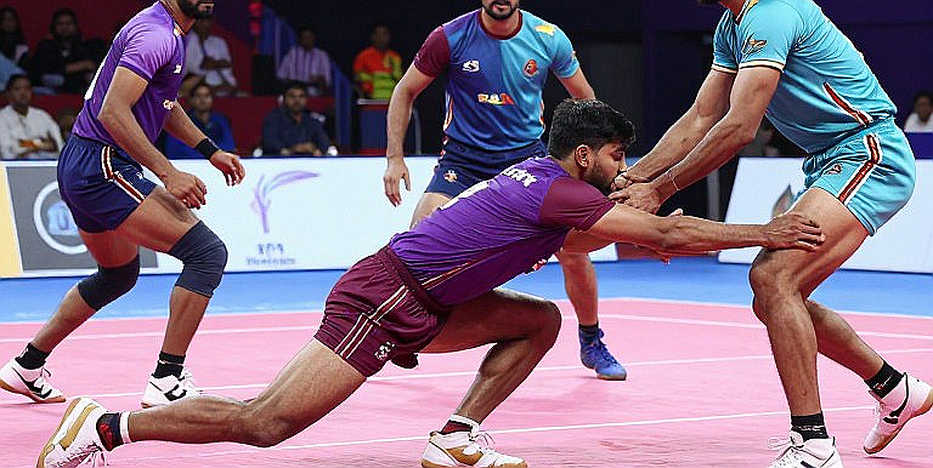
Women's kabaddi has been part of the Asian Games for years, but how much of the coverage feed does it get? The men's group stage has daily reports, scores, lists of the day's best performances. How often has that same feed opened for a women's match? The question matters, because a tournament that does not build audiences does not build the next generation of players. And a report that names no raider gives the next generation no faces — only numbers.
The score-difference rule is cruel but not unnecessary. The problem is that it teaches teams to chase margins rather than matches. In the last five minutes, when the result is settled, nobody risks, nobody goes for the bonus, nobody fights. The audience is no longer watching kabaddi; it is watching arithmetic. In the knockouts that weight eases, but in the group stage it is a shadow that turns good teams into accountants.
If India and Iran meet on September 26, it will be a contest of two kabaddi philosophies — India's patient depth against Iran's aggressive intensity. But the tournament's real answer is not at the top of the medal table; it is hidden in the distance between third, fourth and fifth, a distance that is shrinking, and that shrinking distance is kabaddi's future. If Bangladesh want a semi-final next time, they must organise the arithmetic of losing the way they organise winning — every raid, every tackle, every all-out.
One question remains. On the day every women's group-stage match arrives on the same feed, with the same names and numbers, will we still be talking about this arithmetic — or will we be counting how many people came to the stands, and how many learned to call this game theirs?