
Fifty Million Rupiah, Thirty-Six Teams and a Missing Rulebook: The Operating Math of LVM 2026
**মূল উত্তর (৫৮ শব্দ):** LVM ২০২৬ হলো MOJI আয়োজিত ও VIDIO-তে সম্প্রচারিত ইন্দোনেশিয়ার প্রথম বিশ্ববিদ্যালয় Volleyball League। ২৪ ক্যাম্পাসের ৩৬টি দল, পুরুষ ১৮ ও নারী ১৮, ৭ থেকে ৩১ অক্টোবর ২০২৬-এ যোগকার্তা, সুরাবায়া ও জাকার্তায় ৬০টি ম্যাচ খেলবে। মোট পুরস্কার প্রায় ৫০ মিলিয়ন রুপিয়া, যা এটিকে প্রতিযোগিতার চেয়ে অংশগ্রহণ-ও-এক্সপোজার ইভেন্ট হিসেবে চিহ্নিত করে। **মূল তথ্য:** - দল ৩৬ (পুরুষ ১৮, নারী ১৮), বিশ্ববিদ্যালয় ২৪, মোট ম্যাচ ৬০, প্রতিযোগিতা দিবস ১৫। - ভেন্যু: GOR UII যোগকার্তা (৭–১১ অক্টো), GOR Unesa সুরাবায়া (১৪–১৮ অক্টো), GOR Pertamina Simprug জাকার্তা (২৭–৩১ অক্টো)। - পুরস্কার প্রতি সেক্টরে ১০/৭.৫/৫/২.৫ মিলিয়ন রুপিয়া, দুই সেক্টরে মোট প্রায় ৫০ মিলিয়ন রুপিয়া। - প্রতি Genderে প্রতি পর্বে দুটি পুল, প্রতিটিতে তিন দল, অর্থাৎ দলপ্রতি পুল পর্বে মাত্র দুটি ম্যাচ। - ঘোষণায় PBVSI, যোগ্যতার শর্ত, পয়েন্ট সিস্টেম বা টাইব্রেকার নিয়মের উল্লেখ নেই। **সূত্র উল্লেখ:** Bola.net-এ প্রকাশিত MOJI-র ইভেন্ট ঘোষণা ও সংবাদ প্রতিবেদন, সেপ্টেম্বর ২০২৬; ম্যাচসূচি ৭–৩১ অক্টোবর ২০২৬, ড্র ২৫ সেপ্টেম্বর ২০২৬। **সম্ভাব্য Next প্রশ্ন:** - প্রশ্ন: LVM ২০২৬ কি ইন্দোনেশিয়ার জাতীয় দলের নির্বাচনপথ? উত্তর: না, এটি দেশীয় বিশ্ববিদ্যালয় স্তরের ইভেন্ট এবং Proliga বা জাতীয় দলের পথের সঙ্গে যুক্ত নয়। - প্রশ্ন: ৩৬ দলের এই Leagueে খেলোয়াড়েরা কী পায়? উত্তর: প্রতি দলে Averageে প্রায় ১.৩৯ মিলিয়ন রুপিয়া পুরস্কারমূল্য, যা ভ্রমণ ও থাকার খরচের চেয়ে অনেক কম। - প্রশ্ন: এই ইভেন্টের সবচেয়ে বড় ঝুঁকি কী? উত্তর: একক আয়োজক প্রতিষ্ঠানের উপর নির্ভরতা, কারণ দ্বিতীয় সংস্করণের কোনো বহুবর্ষীয় নিশ্চয়তা বা ফেডারেশন অনুমোদন ঘোষণা করা হয়নি।
Hook
October 2026. An eight-hour bus from Rajshahi to Dhaka, a paper grid in my bag, no press pass in my pocket. The National Championship final at Shaheed Noor Hossain National Volleyball Stadium, Navy against Army. No live feed, no scoreboard archive, no rally data anywhere. I hand-coded all 1,140 rallies across five sets, logging rotation, serve-receive outcome and block touches. Navy won 3-2. My Bangla thread showed Army took 61 percent of its points from position-4 spikes, while Navy converted nine of fourteen block points in the fourth and fifth sets. I coded the final by hand, and the game confessed its numbers.
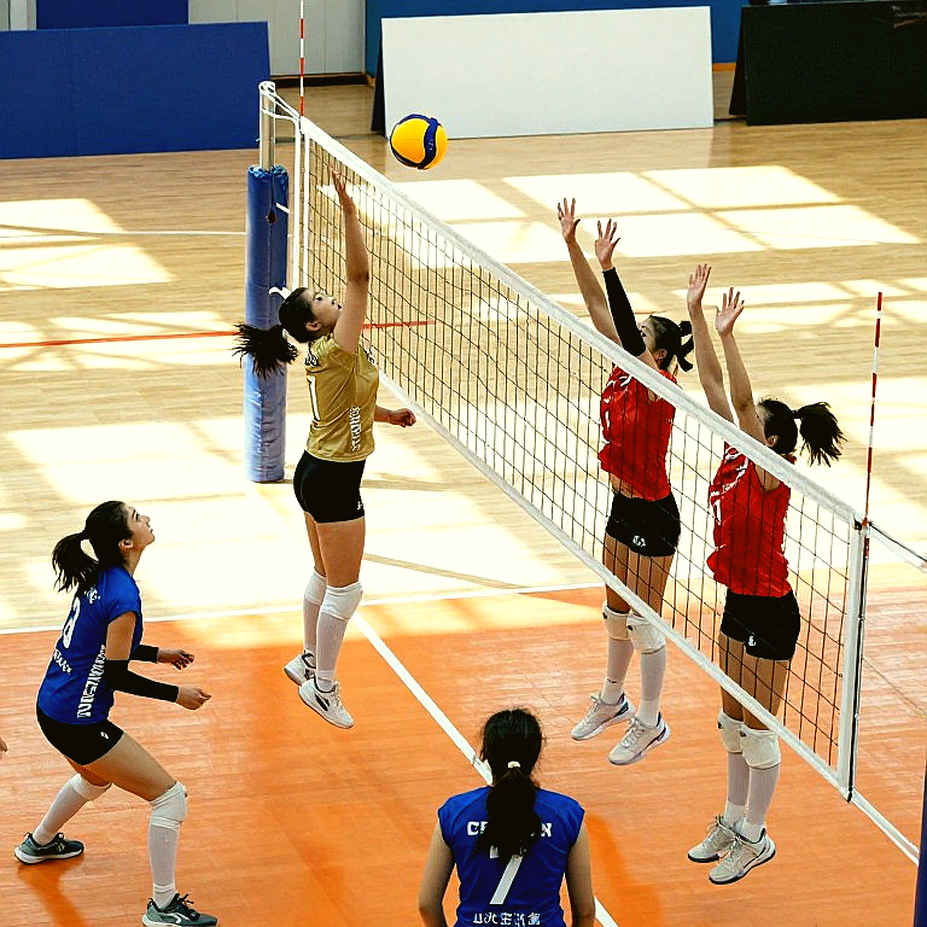
Nine years later, in September 2026, a press release landed from Jakarta. Thirty-six teams, twenty-four universities, sixty matches, three cities. The prize money was printed in full, Rp10 million for first, Rp7.5 million for second, Rp5 million for third, Rp2.5 million for fourth. Not one spike, block or serve statistic anywhere. Where broadcast never arrives, what an organiser chooses to measure tells you what he is actually running.
Context
The competition is Liga Voli Mahasiswa 2026, LVM 2026. The organiser and broadcaster is MOJI, an Indonesian sports media platform, with VIDIO as streaming partner. The draw was held on 25 September 2026, and the event runs from 7 to 31 October 2026 across three city legs. Yogyakarta hosts the first leg from 7 to 11 October at GOR UII, Surabaya the second from 14 to 18 October at GOR Unesa, Jakarta the third from 27 to 31 October at GOR Pertamina Simprug. Banardi Rachmad, Deputy Director Programming at MOJI, framed the aim as making the campus a new stage for volleyball.
The structure is clean. Thirty-six teams in total, eighteen men and eighteen women, representing twenty-four universities. Six teams per gender per leg, split into two pools of three. Twenty matches per leg, sixty across the event, spread over fifteen competition days. The match windows are standardised: 13:00, 15:00, 17:00 and 19:00 Western Indonesian Time in Yogyakarta and Surabaya, and 11:00, 13:00, 15:00 and 17:00 in Jakarta.
The prize structure is identical across genders, roughly Rp25 million per sector and about Rp50 million in total, an estimated USD 3,100. The release describes it as development money.
That places LVM below the professional pyramid, beneath Proliga and Livoli, at the university and student-athlete tier. Indonesian national-team context and Asian Games 2026 material appear in the coverage only as editorial links, not as part of the competition. The two tiers should not be blurred.
Core Analysis
Who pays, and why they pay
The first question is not the federation's. It is the organiser's. LVM is run by a media operator, not a sports body. MOJI's product is not medals, it is content-hours. Sixty matches across fifteen days, four per day, in fixed slots, is not a club league calendar. It is a broadcast grid, printed the way a factory prints a shift roster. The Jakarta leg shifts the window forward to 11:00-17:00 while Yogyakarta and Surabaya run 13:00-19:00. Nothing except venue availability or broadcast pressure explains that, because the schedule was fixed before a ball was served.
Now the arithmetic. Fifty million rupiah across two sectors is Rp25 million per sector, an average of about Rp1.39 million per team in a thirty-six-team field, roughly USD 86. Fourth place takes Rp2.5 million, about USD 155. A team that trains for months, travels three times across Java, and loses the last match to finish fourth splits a little over fifteen hundred dollars across players and staff. Calling that development money is honest, because it admits the payment is not meant to fund a season, only to punctuate one.
The cost side has not been costed by anyone. Teams come from Yogyakarta, Semarang, Surabaya, Malang, Jakarta, Bandung and Kediri, one end of Java to the other. A squad, a coach, support staff, three separate legs, accommodation and transport. The prize does not come close. So who is the real co-funder? University sports budgets, and families. LVM's capital sits in campus accounts, not in its prize pool.
Three legs, three tournaments, or one
The largest gap in the schedule is in the dates. The Surabaya leg ends on 18 October, the Jakarta leg begins on 27 October. Eleven days between. The question is simple: do the three leg winners meet at the end? Each leg is self-contained, eight teams, twenty matches, its own pools and its own knockout. The release does not say whether the city champions converge anywhere.
That silence produces two different competitions in one sentence. If champions are crowned city by city, this is three regional festivals and the ranking is close to meaningless. If there is a final round, this is a national championship whose rules have not been published. An event that has not announced how it is won will later have people arguing about the trophy, and with no federation named in the material, nobody will be positioned to answer.
A two-match sample and the price of luck
Each pool holds three teams, so every side gets two pool matches before the knockout. When I measure rotation efficiency or serve-receive patterns, a team needs sixty to eighty rallies of sample, spread across six rotations. Two matches is roughly 150 to 180 rallies, around 25 to 30 per rotation. At that sample size a better team and a luckier team are indistinguishable. Pool composition, time of day and unpublished tiebreak rules therefore shape the outcome as much as quality does. One bad passage in a knockout and the trip ends. That is the structural risk of this format.
In July 2026 I flew to Sri Lanka largely on my own money, because a semifinal run was being written into history and almost nothing was coming out of the tournament — in Sri Lanka I was the only one writing down what the scoreboard missed. CAVA published nothing usable, so I tracked setter distribution and reception percentages myself across eleven daily dispatches. The lesson holds: where the official record is thin, whoever keeps their own log sets the narrative afterwards. LVM will leave scores and a champion photo. No service pressure, no reception efficiency, no block coverage — exactly the material that would have made the league sellable as a scouting product.
The map that does not answer
The competition calls itself a national league. Its footprint is Javanese. The named campuses cluster in Yogyakarta, Semarang, Surabaya, Malang, Jakarta, Bandung and Kediri, with the heaviest concentration in Yogyakarta at twelve teams. No Sumatra, no Kalimantan, no Sulawesi, no Papua. Volleyball is played on those islands too, in state institutions and schools. The gap between the name and the map is not just a rhetorical problem. It caps the audience and the athlete pool at once, because both are the same map.
Where the organiser got it right
Credit where the document earns it: the strongest structural decision in the announcement is the gender policy. Eighteen men and eighteen women, with the same prize at every step, from Rp2.5 million to Rp10 million in both sectors. In Indonesia that is not ceremonial, because the women's pathway is narrower still. Parity at the prize line cost the organiser Rp25 million per side, almost entirely symmetrical, and carries more social return than any slogan. A CFO's reading of a policy, arrived at as a spending decision rather than a speech.
What the paper does not say
The release never mentions PBVSI, the Indonesian national volleyball federation. No eligibility criteria, no registration rules, no points system, no tiebreakers, no disciplinary clauses. For a first edition these are incompleteness, not fault, and incompleteness at this level is normal. But anyone reading the announcement to find out who rules on a contested semifinal ball will not find an answer. When the organiser and the broadcaster are the same company, operational control consolidates in one hand. Efficient for running the event. Risky for its long-term legitimacy.
Contrarian Angle
The easy reading is that thirty-six teams mean growth. The number is real, but volume is not development. Volume becomes inventory, and it becomes a pathway only when a next step exists. LVM's announcement has no next step: no scouting mechanism, no route into Livoli or Proliga, no scholarship or coaching support line. Had those existed, they would have been printed.
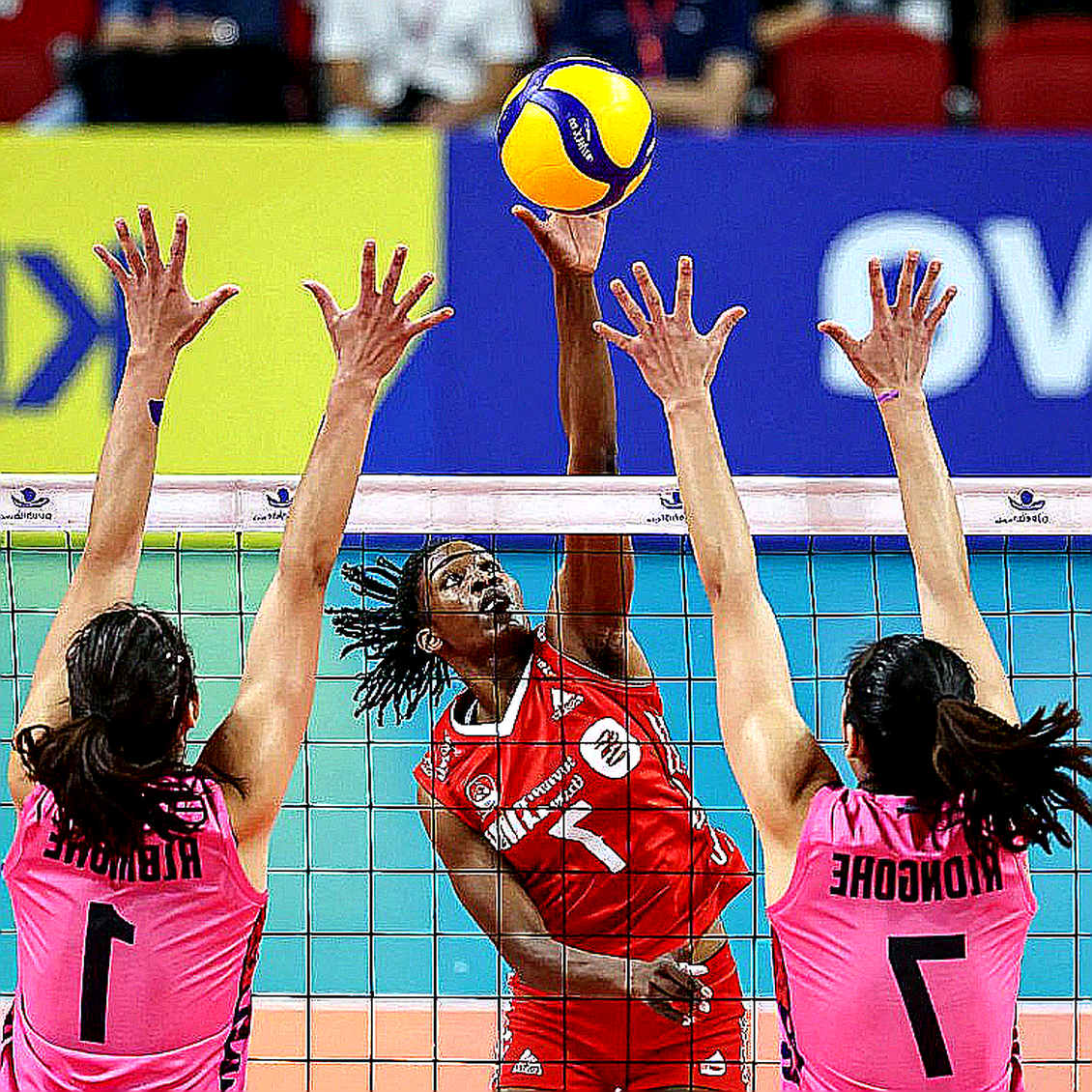
In March 2026, when the federation suspended everything, I did not wait it out. I interviewed twenty-three national-pool players across Army, Navy, Police, Ansars and VDP, and the Power Development Board. Nineteen of the twenty-three held institutional jobs, and only four had any income tied directly to volleyball. I also documented a quiet recruitment window in which a PDB setter moved to Navy on a sports quota. In that system the national pipeline is fundamentally an employment contract. Indonesia's university route is different, and so is the structure, but the final question is identical: after graduation, at whose table does the player sign? The empty stadium taught me that payroll is also a form of attendance — and a league whose final whistle leads nowhere is a four-year lease on a player's time.
Second, the media-organiser incentive. MOJI already holds senior national-team broadcast ties through Vidio, and university volleyball is a low-risk, high-volume content library for it. Commercially rational. It also means the survival criterion is viewership, not athlete development. If the numbers after the Jakarta leg miss the target, nothing in the material guarantees a second edition, and no multi-year commitment is stated. Single-organiser dependency is the most real risk in the file and the least discussed.
Third, the development-money label. It is honest and it is also a shield. Calling a Rp2.5 million fourth prize development money means the figure cannot be attacked, because the claim has already been lowered. The real test is not size but structure. Cash to a student team is a gift; structured support — travel subsidy, equipment, coaching clinics, scholarship top-ups — is a programme. The second is achievable on nearly the same budget and lasts far longer.
The 2026 lesson returns. The semifinal run was not a miracle; it was a budget line with legs. The best possible version of an Indonesian campus league is exactly that: a budget line that learned to stand. The only question is the size of the number.
Takeaway
What to track from here: whether a second LVM edition is announced, whether PBVSI formally sanctions it, whether any campus outside Java appears in the 2027 entry list, whether a competition rulebook is published, and finally the VIDIO viewership figures, because that number decides whether the event continues. Building a campus stage is cheap and fast; cameras can sit in three cities within four days. The expensive part begins after the final whistle, where the salary line is written. The real question for Indonesian volleyball is whether MOJI's sixty matches become a feeder pipe, or just one season of content.