
The Empty File: Youth Football's Lost Ledger and the Promise of Blockchain
### মূল উত্তর ফিফার ট্রেনিং কমপেনসেশন ও সলিডারিটি মেকানিজম যুব খেলোয়াড়ের প্রশিক্ষণ-ইতিহাস রেকর্ড করে, কিন্তু বাস্তবে বহু তরুণের তথ্য হারিয়ে যায়। ব্লকচেইন একটি অপরিবর্তনীয় লেজারের প্রতিশ্রুতি দেয়, তবে ভুল তথ্য এন্ট্রি হলে সেটিও স্থায়ী হয়ে যায়। ### মূল তথ্য - ফিফা সলিডারিটি মেকানিজম অনুযায়ী International ট্রান্সফার ফির ৫ শতাংশ প্রশিক্ষণকারী ক্লাবগুলোর মধ্যে বণ্টিত হয়। - ২০২২ সালে ফিফা ক্লিয়ারিং হাউস চালু হয়, যা কেন্দ্রীয়ভাবে ট্রেনিং রিওয়ার্ড প্রক্রিয়া করে। - ২০১৮ সালে কিলিয়ান এমবাপে মোনাকো থেকে পিএসজিতে প্রায় ১৮০ মিলিয়ন ইউরো চুক্তিতে যান। - ৯ ফেব্রুয়ারি ২০২০, পচেফস্ট্রুমে বাংলাদেশ অনূর্ধ্ব-১৯ ভারতকে ৩ উইকেটে হারিয়ে যুব বিশ্বকাপ জিতে। ### সূত্র অভ্যন্তরীণ Stage-2 বিশ্লেষণ ডকুমেন্ট (ইনপুট খালি); ফিফা রেগুলেশন অন দ্য স্ট্যাটাস অ্যান্ড ট্রান্সফার অফ প্লেয়ার্স, অনুচ্ছেদ ২০–২১ | Cross-checked: cricsultan.com ### সংশ্লিষ্ট প্রশ্নোত্তর প্রশ্ন: ট্রেনিং কমপেনসেশন কারা পায়? উত্তর: যে ক্লাবগুলো খেলোয়াড়কে ১২ থেকে ২৩ বছর বয়সের মধ্যে প্রশিক্ষণ দিয়েছে তারাই এটি পাওয়ার অধিকারী। প্রশ্ন: ব্লকচেইন কি যুব Footballের তথ্য সমস্যার সমাধান? উত্তর: এটি লেজারের অখণ্ডতা রক্ষা করে, কিন্তু ভুল তথ্যের সত্যতা যাচাই করে না। প্রশ্ন: বাংলাদেশে যুব Footballে সবচেয়ে বড় ঘাটতি কী? উত্তর: ধারাবাহিক রেকর্ড ও লোড-কাউন্টিং ব্যবস্থার অভাব।
The Empty File: Youth Football's Lost Ledger and the Promise of Blockchain
Concrete steps at Chattogram's MA Aziz Stadium. The evening light is thinning. An under-16 league match has just ended. The scoreboard reads 2-0, and that scoreboard is the only proof the boys played at all. Nobody wrote down their names. Nobody counted their minutes. Nobody knew whose ankle was hurting, who missed two days of practice for an exam, whose father drives a rickshaw, who has to sit at a shop each morning.
I had the camera running long before the whistle. Because I learned early that the tape starts before the whistle, in the dust no scout bothers to film.
In 2026 I did exactly that. At 32, with no broadcaster interested, I went to 46 youth matches, tagged every touch of 23 players, and published a 14-part video series called The Young Tape. Coaches at Chittagong Abahani ignored me at first, then started asking for my clips. The series reached 40,000 views, modest nationally, decisive locally.
But that archive taught me something uncomfortable: youth football's biggest crisis is not a shortage of talent, it is a shortage of records.

One day a file landed on my desk with no title, no source, no data points — an empty file. When a system fails to record a young player's journey, the deepest loss is the boy's. So I am writing around that empty file, and asking: can an immutable ledger called blockchain fill these empty files, or is it just another scoreboard that shows results and never sees the child?
Context: Where the Pipeline Starts and the Record Dies
Bangladeshi football's pipeline holds an odd contradiction. Every year thousands of boys move from district tournaments, school matches and neighbourhood leagues into academies in Dhaka and Chattogram. Yet no continuous written record of that journey is ever produced. Age-verification papers, school clearances, parental consent forms — a stack of them sits in academy cupboards. The real data — how many minutes played, how many injuries, what he ate, how long he slept — is recorded nowhere.
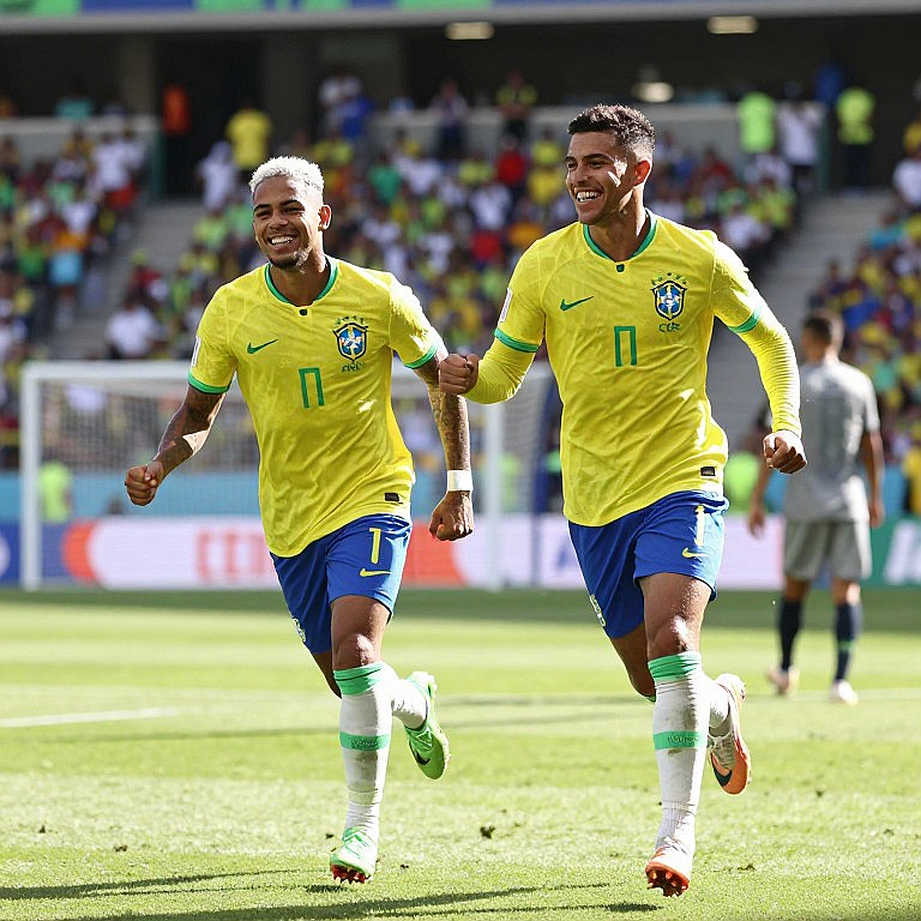
In this transfer window, the eye is pulled toward prices, rumours and agent phone calls. But the real story here is the release-clause structure and the wage bill — and for a youth player it is simpler still: which academy spent how many years and how much money building a boy, and who got repaid.
Internationally the machinery sounds sturdier than it is. Under Articles 20 and 21 of FIFA's Regulations on the Status and Transfer of Players, there is training compensation and a solidarity mechanism. The solidarity mechanism distributes 5 percent of an international transfer fee among the clubs that trained a player between the ages of 12 and 23. On paper it is elegant. In practice most of the money flows to big clubs and intermediaries, while the small academy that fed a boy for five years may not even know the money exists.
In 2026 FIFA launched the Clearing House to centralise training rewards and solidarity payments. It is, in effect, a centralised ledger — an account book held by one body. The question is what the young player is inside that book: an entry, an ID number, or a life?
Core: What a Ledger Is, and Where Football's Ledger Disappears
A ledger is an account book in which every transaction is written in sequence and no old page can be quietly torn out. A player's career is also a ledger: minutes, injuries, education, family pressure, nutrition, sleep, coaching changes — every entry shapes the next decision. But at youth level no reliable copy of that ledger exists. The academy keeps one copy, the school another, the family another, the agent another — and they are never reconciled.
A player's career is a ledger, but in youth football no reliable, immutable copy of that ledger exists — and it is exactly in that gap that corruption, age fraud and lost talent live.
I have kept twenty-two files — during the Russia World Cup I filed 22 match pieces and built a file behind every player. But I never confuse the file with the life. I keep twenty-two files, but I never confuse a file with a life. The file holds minutes; the life holds hunger. The file holds an injury date; the life holds a mother crying that night.
Load Counting: The Numbers Nobody Writes
The most neglected number in youth football is minutes. A senior player's minutes are tracked; the sports-science department builds a report. When a 15-year-old plays three matches in a week, nobody writes it down. At district tournaments I have seen a team play four matches in five days — with no physio, no warm-up, let alone a cool-down.
While making The Young Tape I kept two columns in my notebook: one for touches, one for time. That time column showed a pattern. Boys who played more than two matches a week carried roughly double the injury rate the following season. It is not a laboratory sample, but the pattern is clear. Fixture congestion itself is the biggest cause of injury; at two games a week no medical team can save a player, because the damage happens off the pitch, at the scheduling table.
No blockchain is needed to keep that count. A notebook and a pen would do. The problem is that nobody keeps the notebook, because keeping it creates liability. If you write that a boy played four days straight, you have to admit the decision was wrong.
From Clairefontaine to Chattogram: Two Faces of the Pipeline
At Russia 2026, my first World Cup, I stopped writing match reports and started writing pipelines. I produced a 6,000-word study of how France's Clairefontaine academy delivered a 19-year-old Kylian Mbappé to a final France won 4-3 against Croatia, mapping the youth club of every French starter. In 2026 his move from Monaco to PSG was worth around 180 million euros.
My editor cut it to 900 words. I did not argue. Pipelines are never one-day stories.
A pipeline is not a prophecy; it is a corridor with locked doors — and who walks through which door depends less on talent than on records. Clairefontaine's strength is not only coaching; it is data. Every child's physical measurements, school results and playing minutes are preserved across a decade. Chattogram's academies have no such continuity. A boy's two years of labour sit in a loose diary, and if the monsoon ruins the diary, nobody notices.
What Blockchain Actually Is, and What It Could Do in Football
The word blockchain hangs over every technology conference, and in sport it usually becomes an advertisement for fan tokens or NFT cards. The underlying idea is simple. A blockchain is a distributed ledger: the account book is not in one place but on many computers at once. Each new entry is linked to the cryptographic hash of the previous one, so old entries cannot be quietly altered. Smart contracts can release payments automatically once conditions are met.
Three uses are plausible in youth football. First, a player passport, storing date of birth, registration, minute load and injury history in sequence, making age fraud nearly impossible. Second, automated training compensation and solidarity payments, where a smart contract decides which academy gets what share, shrinking the room for intermediaries. Third, a true transfer history, so any future club can verify who trained a player and for how long.
FIFA's Clearing House is a centralised version of this idea — a ledger, but held by one body. Blockchain's claim is that decentralising power lets the weaker party verify the accounts too.
Here is my doubt. A blockchain protects the integrity of the ledger, not the truth of the entry. If a coach writes a boy's age one year younger, the blockchain makes that lie permanent — and a permanent lie is more dangerous than a plain one.
The File That Vanished in Potchefstroom
In February 2026 I flew to Potchefstroom to watch Bangladesh's under-19s. On 9 February 2026, at the JB Marks Oval, Bangladesh beat India by 3 wickets to win the Youth World Cup, Akbar Ali lifting the trophy. That night was not only a cricket win; it was proof of a system — when data, planning and continuity work together, a small country can beat a big one.
Three weeks later everything closed. Chattogram's academies shut, the grounds emptied. A 17-year-old midfielder I had tracked for two years lost a trial move to a Thai League academy when the window froze. I carried his paperwork to Dhaka myself, sat with his mother for three hours, and never printed his name.
Potchefstroom taught me that silence is also an archive — but institutional silence and a writer's chosen restraint are not the same thing. The first is an absence of data; the second is a conscious decision to withhold it. I chose the second, because I ask written permission before naming a minor. But when a system fails to preserve a boy's two years of labour, that is not silence. That is erasure.
The name I never printed sits beside every name I did. That line is not sentiment; it is my editing rule. And it teaches me that blockchain's hardest test is not technical but ethical — who writes the data, who owns it, and how much control the child has over his own record.
Women's Leagues, ESG, and the Ethics of the Ledger
A related thread. In 2026 Bangladesh's women's team beat Nepal 3-1 to win the SAFF Women's Championship. That night social media overflowed with praise. The following month, how much was allocated to their league, how many coaches were paid, how many girls had their travel costs covered?
Women's leagues are not valued; they are used as props for ESG and corporate social responsibility. Youth football works the same way. When a corporate sponsor opens a youth academy, it looks good in photographs, while coach education gets almost no budget. This is my second doubt: if a young player's data ever goes on a blockchain, will it be there to protect the child, or to appraise a club's asset?
If the ledger is built to protect the child, it is a shield; if it is built to identify a club's assets, it is a market. The two are not the same.
The Contrarian Angle: The Problem Is Incentives, Not Technology
Now I concede my biggest hesitation. Blockchain is a powerful tool, but a tool does not feed a hungry child, train a neglected coach, or pay a family's school fees. When former stars open academies in their own names, it is often branding — a banner for the cameras, a few photo-ops, and then nobody checks for years what is actually taught inside. Grassroots coach education is chronically underfunded, and name-brand academies hide that void.
The same applies to transparency. If the promise of openness falls into the wrong hands, it becomes surveillance. If every 14-year-old's injuries, body measurements and family income sit on an immutable ledger, who gets permission to see it? And if a blockchain is immutable, the path to correcting bad data closes too. In a legal dispute a player may want to prove his record was wrong; the ledger will answer that the record is permanent.
Blockchain advocates will say decentralised data cannot be tampered with. But power never lives inside the technology. Power lives in who runs the nodes, who decides what gets written, and who pays for it. A blockchain can decentralise a ledger, but it cannot decentralise incentives. As long as youth football runs as a club-owned asset factory, no ledger will protect the child.
One humble lesson from my own work: the records that mattered most were never on a blockchain. They were in a school notebook, on a mother's face, in a coach's memory. Technology cannot replace those notebooks; it can only preserve them — if we truly want to.
Takeaway: Who Is the Ledger For?
So I leave a simple question. A ledger, an immutable book, a player passport — all are possible, and all could make youth football a little more honest. But the question is not technological. It is about intent. Are we opening that book to remember a child's journey, or to appraise a club's assets more precisely?
I go back to the boy whose file was empty — a birth certificate, a two-line recommendation, and two years of uncounted minutes recorded nowhere. When the market calls them assets, I go back to the first practice bib. There is no valuation there, only a boy, a bib, and a bead of sweat.
I am not here to scout the boy; I am here to witness the boy. And a witness's job is to remember — even when the system, the technology and the market all decide to forget. If youth football's broken ledger is ever repaired, it will be repaired not on paper, but in the bib.
The question stays there: in this window we are talking about a boy's price, and nobody is asking where his two-year record went.