
Defending Champions Out in Round One: What the 21-12, 19-21, 14-21 Score-Line Actually Shows
**মূল উত্তর** এশিয়ান Games ২০২৬-এর Badminton পুরুষ দ্বৈতের প্রথম রাউন্ডে ডিফেন্ডিং চ্যাম্পিয়ন সাতউইকসাইরাজ র্যাঙ্কিরেড্ডি ও চিরাগ শেট্টি ২১-১২, ১৯-২১, ১৪-২১-এ থাইল্যান্ডের পিরাচাই সুকফুন ও পাক্কাপন তিরাতসাকুলের কাছে হেরে বিদায় নিয়েছেন। এশিয়ান Games বাওফ র্যাঙ্কিং পয়েন্ট দেয় না, তাই ক্ষতিটা মূলত মর্যাদা ও গতিপ্রবাহের। **মূল তথ্য** - স্কোরলাইন ২১-১২, ১৯-২১, ১৪-২১; প্রথম গেমের পর নিয়ন্ত্রণ সরে যায়। - প্রতিপক্ষকে প্রতিবেদনে বিশ্ব র্যাঙ্কিং ৩৬ বলা হয়েছে, স্বাধীন যাচাই বাকি। - ভারতের দ্বিতীয় ও তৃতীয় সারির দ্বৈত জুটি ২১-৯, ২১-৫ এবং ২১-১৪, ২১-১১-এ হেরেছে। - ধ্রুব কাপিলা ও তানিশা ক্রাস্তো ২২-২০, ২৪-২২-এ জিতে পরের রাউন্ডে শীর্ষ বীজ ফেং ইয়ান ঝে ও হুয়াং ডং পিং-এর মুখোমুখি। - এশিয়ান Games Badmintonে কোনো বাওফ বিশ্ব র্যাঙ্কিং পয়েন্ট নেই, তাই র্যাঙ্কিং-ক্ষতি প্রায় শূন্য। **সূত্র** Khel Now-এর এশিয়ান Games ২০২৬ Badminton ব্যক্তিগত ইভেন্ট প্রথম দিনের রিভিউ। ভেন্যু, তারিখ ও প্রতিপক্ষের র্যাঙ্কিং-সংখ্যা স্বাধীনভাবে যাচাইয়ের অপেক্ষায়। **সম্ভাব্য Next প্রশ্ন** প্রশ্ন: এশিয়ান Gamesে হারলে কি বিশ্ব র্যাঙ্কিং পয়েন্ট কমবে? উত্তর: না, এশিয়ান Games Badmintonে বাওফ র্যাঙ্কিং পয়েন্ট থাকে না। প্রশ্ন: সাতউইক-চিরাগ কি Form হারিয়েছেন? উত্তর: একটি ম্যাচের নমুনায় তা বলা যায় না, পরপর দুই-তিনটি ইভেন্টের ফল দেখতে হবে। প্রশ্ন: ভারতের Next মেডেল-সম্ভাবনা কোথায়? উত্তর: মিশ্র দ্বৈতে ধ্রুব-তানিশা এবং সিঙ্গেলে উন্নতি হুদা।
21-12, 19-21, 14-21. Day one of the badminton individual events at the 2026 Asian Games, Ichinomiya City Municipal Gymnasium, Japan. I laid the row into the spreadsheet after the first round of the men's doubles and it refused to sit flat. I do not begin with the story. I begin with the row that refuses to fit.
The score belongs to the defending champions and fourth seeds, Satwiksairaj Rankireddy and Chirag Shetty. The opponents were Thailand's Peeratchai Sukphun and Pakkapon Teeratsakul, given a single identifier in the report: World No. 36. The champions won the opener 21-12, then dropped the middle game 19-21 and the decider 14-21. Placed side by side, those three numbers are not a verdict. They are a map of where control moved.
I have covered badminton for the China market for years, and my habit is a hand-coded shot ledger. I counted 6,100 shots before I trusted a model to speak Chinese. A score-line like this is not a result to me; it is a diagnostic.
The context matters first. Badminton at the Asian Games runs in two phases, team event then individual. The individual draw is single elimination: one loss, straight out. And the fact Indian headlines usually bury: the Asian Games awards no BWF world-ranking points. The ranking cost of this defeat is close to zero. The cost sits in prestige and momentum.
India's first day was mixed. Three combinations advanced, three went out. In the men's doubles, not only the top pair but the second and third-tier pairs lost heavily, one at 21-9, 21-5, another at 21-14, 21-11. On the other side, Unnati Hooda won her singles match 21-9, 21-10. In mixed doubles, Dhruv Kapila and Tanisha Crasto won two matches, one of them 22-20, 24-22 against a Malaysian pair. In the team event, Treesa Jolly and Gayatri Gopichand had beaten the Japanese pair. Pockets of form exist in the same camp as the depth gap.
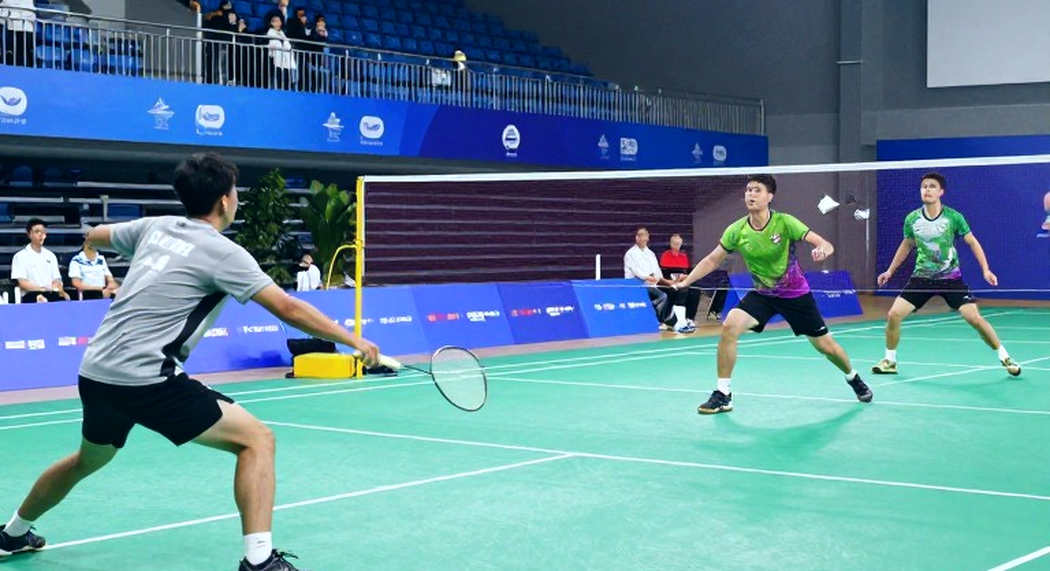
In the background, another thing is moving: new pairings of established names at the top of the seeds. Second seeds Fajar Alfian and Muhammad Shohibul Fikri in the men's doubles; Yuki Fukushima and Mayu Matsumoto in the women's doubles. Post-Olympic-cycle reassembly in doubles is close to a rule.
Now the real work, structure before names. India's top pair has a well-known winning model: Rankireddy's back-court power behind, Shetty's net interception in front, a front-back attack. The 21-12 opener means the model ran cleanly, with clean back-court swings, short rallies and pressure on every shot.
What Thailand did next is half-visible in the score-line itself. When a side loses a game at 12 and drags the next to 19-21, it has changed tempo. Usually that means altered serve and receive placement and slower rallies, denying the big hitter clean back-court swings. If the rally gets stuck in flat mid-court exchanges, the front-back attack loses its base.
The most diagnostic data point is the third game. A 19-21 loss and a 14-21 loss are not the same thing. The first says the match went to the wire. The second says the collapse was structural. A widening margin in the decider points to the first three shots, the serve, the return and the third shot, and to the phase after the interval. And this is where my limit is clear: the score-line carries no smash speed, no rally length, no error rate. Without a metric I cannot say why. I can only say where.
What I can say is structural. The heavy defeats of India's second and third doubles pairs are visible in the same dataset, and the gap between the elite pair and the tier beneath is wide. The top pair is world class, but the floor under it is thin, and that is the most durable fact of the day, not the most dramatic one.
The dramatic fact sits elsewhere. Kapila and Crasto's 22-20, 24-22 win in the mixed doubles, and Hooda's 21-9, 21-10 in the singles, are the counter-signals. Next round, Kapila and Crasto meet top seeds Feng Yan Zhe and Huang Dong Ping, which is the old story of Chinese mixed-doubles dominance. That section of the draw is a test for them, not a gift.
Now the part where I stay careful. A collapse in the score-line is not a collapse in form. This is a one-match sample. One match does not make a trend, especially with no smash speed, error rate or rally-length data. The World No. 36 figure is the report's own claim and has not been independently verified. The venue, the dates, even that ranking, all await verification.
The second caution is about format. Single elimination is itself an upset amplifier. Being the fourth seed does not protect the first round; it only keeps you on one side of the draw. One bad game ends the campaign. That is the rule, not a new disease. Much of what headlines call a shock is the chemistry of the format.
The third caution deserves the most discussion and gets the least. New pairings of established names at the top of the seeds mean cycle turnover is underway in doubles, and turnover opens a short vulnerability window for almost every elite pair while new combinations bed in. At the same time, the Rankireddy-Shetty winning structure is now fully written into opponents' scouting reports, and the profile of a compact Southeast Asian counterattacking pair is a recurring risk against it.
Many rows like this have passed through my hand-coded files, and each one teaches the same thing: every audit is a small confession, the model was mine, and it was wrong. Today's row joins that list. From one score-line I cannot write decline. I can write exposure, because the thinness of the floor beneath India's top pair became visible.
One thing I will say firmly, because it needs no number to support it. Where there are no ranking points, the cost of a defeat lands on the preparation structure, not on the ranking table. The Asian Games individual event adds nothing to the BWF world ranking. This loss breaks no index. It is booked in momentum, confidence and public opinion, and public opinion does not forgive easily, least of all for defending champions.
That is exactly why the method for reading the next few weeks should be set now, before we turn one match into a story. My threshold is simple: if the top pair exits in the first or second round across two or three consecutive events, questions about form or physical load become legitimate. One match does not get there. Meanwhile, India's mixed-doubles progress and the depth of its second tier are the two threads that matter over the next two years.
I leave one question open, because it is still unanswered in my ledger. If the man who counted 6,100 shots to learn how to trust a model gets only a score-line today and no smash speeds, what should he file? Today's answer: exposure, not prophecy. The spreadsheet was already my monastery, and I am its quiet, stubborn monk. I will not write more than the numbers say.