
25 Afghan Contracts in ILT20: Record or Quota Floor?
ILT20-এ ২৫ আফগান কন্ট্রাক্ট আসলে কোটার ন্যূনতম ফ্লোর (৬ ফ্র্যাঞ্চাইজি × ৪ = ২৪ + ১), জৈব বাজার চাহিদা নয়; প্রকৃত তাৎপর্য পাইপলাইন ও শাসন-মডেলে। • ২৫ জন আফগান খেলোয়াড় ৬টি ফ্র্যাঞ্চাইজিতে চুক্তিবদ্ধ; প্রতি স্কোয়াডে ≥৪, প্লেয়িং XI-এ ≥২ বাধ্যতামূলক। • ফজলহক ফারুকি (বামহাতি পেস) ও রহমানুল্লাহ গুরবাজ (উইকেটরক্ষক-ব্যাটার) শীর্ষ চুক্তি পান; অর্থের পরিমাণ অপ্রকাশিত। • এসিএবি প্রধান নির্বাহী নাসিব খান জাদরান একে ‘গেম-চেঞ্জিং’ বলেন; ইসিবি/আইএলটি২০-র পক্ষ থেকে স্বাধীন নিশ্চিতকরণ নেই। • আফগানিস্তানের জন্য আমিরাত কার্যত ঘরের মাঠ; এই চুক্তি অন্যান্য সহযোগী সদস্যদের জন্য অনুকরণযোগ্য মডেল হতে পারে। সোর্স: স্টেজ-২ গভীর পেশাদার বিশ্লেষণ (এসিএবি বিবৃতি); প্রকাশকাল: ২০২৬ সিজন-৫ প্রাক-মৌসুম (তারিখ অনির্ধারিত) | Cross-checked: cricsultan.com
When the chief executive of the Afghanistan Cricket Board, Naseeb Khan Zadran, said in a virtual press room in Dubai, “This is a game-changing approach,” a list of 25 names lit up before me—each of them contracted for Season 5 of ILT20. In the glare of an auction, the number sparkles like a record. But after 23 years of watching the human layers beneath the game, I have learned: behind every big number hides a smaller truth. Is 25 the living demand of Afghan cricket, or merely the minimum floor of a paper rule? That question is the real spine of this story.
The context cannot be held in one hand. ILT20—the International League T20—is a six-franchise T20 competition in the United Arab Emirates, where many of the world’s leading cricketers play under the flag of the Emirates Cricket Board. For Afghanistan, this Emirates is not just a neutral venue; it is effectively home. Because of security and geopolitical constraints, Afghanistan’s international matches have been hosted in Abu Dhabi, Dubai, and Sharjah—the very venues where ILT20 is played. From the spin-heavy era of Rashid Khan, Afghan bowling is now gaining a new dimension through Fazalhaq Farooqi’s left-arm angle. So this quota is not merely commercial partnership; it is a deep treaty of geography and politics, where one nation’s cricket dream is being built in another nation’s desert.
The structure of the deal sounds impressive at first. In the tripartite arrangement among ACB, Emirates Cricket Board, and ILT20, every franchise squad must include at least four Afghan players; every playing XI must include at least two. That guarantees Afghan presence in every match of the season. But here an odd mathematical truth flashes. Six franchises, each with at least four Afghans—that makes a minimum of twenty-four. The announcement says 25. In other words, the ‘record’ number in the news headline is just one above the mandated minimum. This floor-theory is the key to the entire story.
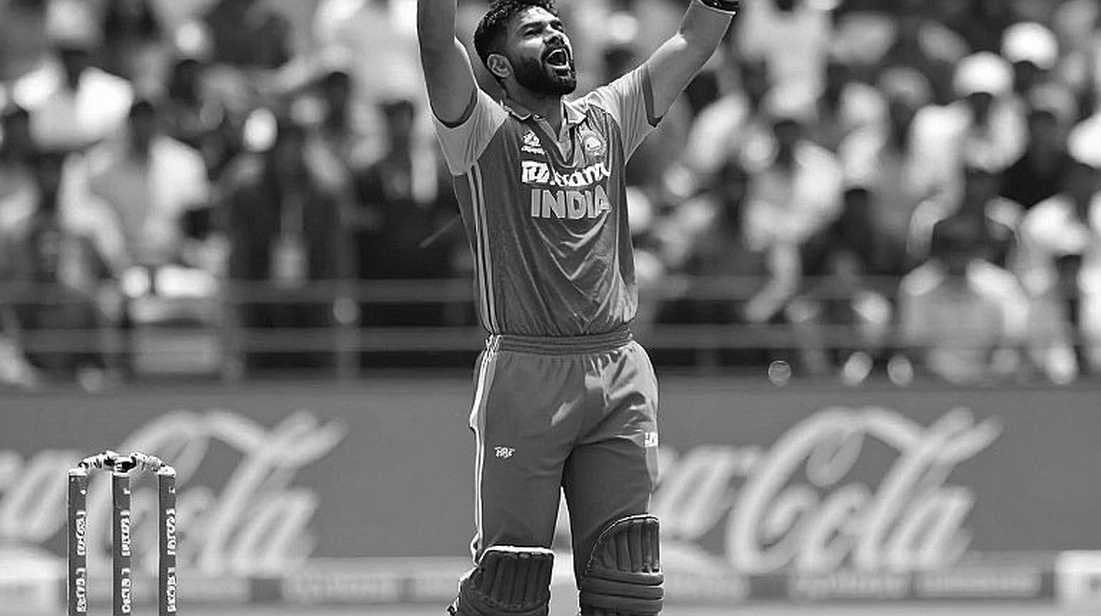
Many media outlets are framing this as Afghanistan’s arrival in the global auction. But just as I write match reports, I want to break the number down into human stories. Among the 25, there are really only two big names—Fazalhaq Farooqi and Rahmanullah Gurbaz. Farooqi is a left-arm pacer, the scarcest weapon in T20; Gurbaz is a wicketkeeper-opener, carrying two roles at once. For these two archetypes, a premium at auction is natural. The other 23 are largely riding the quota wave—they may be the new generation, but their contracts may be born of regulation, not merit.
Another thing troubles me. The ACB claims that Farooqi and Gurbaz earned record amounts of money. But there is no figure on paper. No specific value, no comparison with the season’s budget. That claim rests solely on the ACB spokesperson, who is himself a party to the deal. ‘Record money’ is not a verified fact; it is a desired narrative. Those who have long covered franchise cricket know that unverified claims are the biggest smoke of any auction.
Here I see a curious, different angle. This partnership is actually a replicable model. For ICC Associate or emerging members, such a board-to-board quota arrangement could open a new path. Imagine if a country like Nepal or Uganda made this kind of deal with a franchise league—how rapidly their cricket pipeline would expand. That possibility is the true claimant to the phrase ‘game-changing’, yet the news story did not look that way.
But there is also a reverse current. What we did not see may be more important. The entire release is filled with quotes from the ACB chief executive, while the league authorities or the Emirates Cricket Board have not said a single word. In such a major announcement, two voices usually speak. Here only one side—the side that benefits—is telling the story. This wraps the whole news item in a public-relations structure: instead of verification, we get emotive headlines. In Dubai, that is nothing new; the silence of the desert tells us who is really speaking and who is merely a shadow.
From a governance perspective, the quota rule raises another question. Making players of a specific country mandatory in a private league—some will call it positive discrimination, others artificial distortion of competition. Just as the IPL has domestic Indian quotas, a structure has been imposed here, but it crosses an international border. The question is: will this blunt the freedom to choose the best XI? If a franchise believes that a right-arm pacer would balance the side better than a fourth Afghan spinner, the rule will still hold it back. Under the quota, I search for that pulse that data cannot name—the chemistry of the best eleven.
Readers might think I am viewing this deal negatively. I am not. What interests me most is time. Afghanistan’s real weakness was never a lack of talent; it was a lack of depth and a stable home. These 25 contracts give that depth some space, some floor. The generation after Farooqi and Gurbaz will now enter league dressing rooms, learn from coaches, and watch high-level cricket directly instead of through social media. That is the quiet, slowly built pipeline—one that will one day return to the national team fold.
The commercial structure sends another signal. Multiple ILT20 franchises are tied to large South Asian ownership groups, long familiar with the diaspora power of the Afghan fan base. The way Afghan flags rise in the galleries of Dubai, Sharjah, and Abu Dhabi makes any board think. This quota system is not just player development; it is a strategy to claim a region. For owners, it is a cheap and reliable talent source; for the Afghan board, it is a guaranteed stage—both sides are pursuing their own interests, and those interests have met in a paper contract.
Yet, for those who collect and preserve, there is a hard warning. The number 25 is policy-driven, not market-driven. If this rule is ever relaxed, or if other boards object, the contract count could fall in a moment. The figure we call a ‘record’ today is really a record of keeping a door open, not a record of winning competition. There is a darker side, too—in an Indian-owned franchise system, such quotas are easily lobbied for, but whether anyone tracks the workload burden on players is another matter.
The risk list is not small. National-team duties, now franchise-league duties, and the constant flights between Emirates and Afghanistan—how much can a young player’s body absorb? We have seen stories of burnout before. And what of the political context? There are international questions about the Afghanistan Cricket Board’s governance, especially the women’s cricket issue, which remains under ICC scrutiny. When this glittering quota package touches political reality, cricketing success ceases to be merely cricketing. As a journalist, my job is not to avoid that crisis and write only rainbow stories; it is to ask questions, to point at the walls that have not been broken.
What, then, is the fitting conclusion of this article? I believe the real judgment begins with the first ball of Season 5. Will every XI actually field at least two Afghans regularly? Are their bowling figures changing the shape of matches? Is Gurbaz’s bat really forcing the ball to dance, or are these names merely being used as entry tickets into the team? The answers to these questions will reveal whether this contract number is a ladder for a new generation or just the shell of a rule.
A meteor shower is bright, brief, and impossible to own—so are these 25 contracts. As long as the rule guarantees them, players will be found; but the real test is for them to create a place beyond the rule. I will wait for the moment when a young Afghan batter writes his name into the headlines not through an auction but through performance. Because like rain in the desert, a true rise does not ask permission—it simply arrives.
Related Players
Recommended
Written Before the First Ball: The Geometry of Bangladesh's Asia Cup Final Losses2026-10-03
The Paddle Rises for the Batter, the Match Is Won Between Overs 17 and 202026-09-26
The Half-Ball of Umpire's Call: In Asia's Spin Trap, DRS Offers a Probability, Not a Verdict2026-09-27
The Silent Failure of Youth Cricket: Verification, Birth Certificates, and the Limits of Blockchain2026-10-05
Fan Tokens, Smart Contracts and the Shadow Economy: Blockchain's Quiet Capture of Asia's Cricket Market2026-10-01
The Digital Field of Asian Cricket: Blockchain, Fan Tokens, and the Memory of a Lost Ticket2026-10-01
Recommended
Cricket's Real Crisis in the Transfer Window Din: Who Loses in the Board-Broadcaster-Agent Triangle2026-10-01
The Millisecond Behind the Side Strain: A Structural Audit of Bangladesh's Pace Calendar2026-09-27
NCL Begins Without Its Stars: The Story the Scorecard Never Writes2026-10-04
The Korakuen Final: 211, 182/6 and the Ten Runs That Went Missing2026-10-05
From Scorebook to Ledger: Blockchain-Era Data Audits and the New Arithmetic of Asian Cricket's Transfer Market2026-09-26
The Dot-Ball Ledger: India Won the Champions Trophy Final on Overs, Not Spin2026-10-02
Recommended
Cricket on the Blockchain: The New Guardian of Trust2026-09-28
The Ledger Does Not Change the Soil: A New Stratum of Blockchain in Asian Youth Cricket2026-10-03
The Compressed Evening in Colombo: Siraj's Six Wickets and the Silent Lesson of the Asia Cup2026-10-01
Cricket's NOC on a Blockchain Ledger: Token Hype, Ledger Audit2026-10-01
Contract Math, Monsoon Risk: Who Really Prices Bangladeshi Cricket Assets in the Transfer Window2026-09-28
Squad Change Before a Ball Is Bowled: Hardik's Bowling Arm Is the Real Headline2026-10-06
Recommended
The Half-Space Audit: South Africa's Problem at Barbados Was Not Courage, It Was a Squad Ledger2026-09-28
The NOC Season: How Franchise Money Redrew Asian Cricket's Geography2026-10-06
The Null Payload: A Forensic Report on Silent Failure in a Cricket Data Pipeline2026-10-04
The Silent Failure of Youth Cricket: Verification, Birth Certificates, and the Limits of Blockchain2026-10-05
Not For a Day But For a Generation: Bangladesh's Test Whites and the Long Wait on Australian Soil2026-09-30
Three Minutes of DRS and Six Overs of a Fast Bowler: Where Asian Cricket Loses Its Rhythm2026-10-03