
Barcelona's 'Fresh Blow' Before Getafe: The Injury List Is the Story, Not the Headline
মূল উত্তর: গেটাফের বিরুদ্ধে বার্সেলোনার ম্যাচের আগে দলের চোট-তালিকাই বড় খবর। রাফিনহা (ডান উরুতে হ্যামস্ট্রিং ইডিমা) ছিটকে গেছেন; ক্রিস্টেনসেন (রেক্টাস ফেমোরিস ছিঁড়েছে, ২০ সেপ্টেম্বর) আলাদা প্রোগ্রামে; ডি ইয়ং মেডিক্যাল ক্লিয়ারেন্স পাননি; জোয়ান গার্সিয়া প্রত্যাবর্তনের পথে। মূল ঝুঁকি একক নয় — চারজনের চোট একই বুলেটিনে জড়ো হওয়া। মূল তথ্য: - রাফিনহা: ডান উরুতে হ্যামস্ট্রিং ইডিমা, সারা সপ্তাহের অনুশীলন মিস, গেটাফের বিরুদ্ধে আউট। - ক্রিস্টেনসেন: রেক্টাস ফেমোরিস ছিঁড়েছে ২০ সেপ্টেম্বর, আলাদা প্রোগ্রাম, সময়সীমা "More কয়েক সপ্তাহ"। - ডি ইয়ং: দলের সঙ্গে অনুশীলন করছেন, তবে মেডিক্যাল ক্লিয়ারেন্স নেই; বেঞ্চ অপশনই সম্ভাব্য। - গোলকিপার: চারজনের পুল (জোয়ান গার্সিয়া, লিভাকোভিচ, সেজেসনি, বনফিল) — যাচাইযোগ্য ডেটা। - বিরতি: তিন সপ্তাহের International বিরতির পর ফেরা; রাস্টিনেস ও রিইন্টিগ্রেশন ঝুঁকি। সূত্র: Goal.com প্রতিবেদন (সংবাদ), মূল দাবি Mundo Deportivo-র ক্লাব-ঘনিষ্ঠ রিপোর্ট ভিত্তিক। | Cross-checked: cricsultan.com সম্পর্কিত প্রশ্নোত্তর: প্রশ্ন: গেটাফের বিরুদ্ধে বার্সেলোনার আক্রমণে প্রভাব কী? উত্তর: রাফিনহার অনুপস্থিতিতে ডান দিকের ওপেন-প্লে ক্রিয়েশন ও সেট-পিস কোয়ালিটি কমবে। প্রশ্ন: গোলকিপার পরিস্থিতি নিয়ে সতর্কতা কেন? উত্তর: নাম করা চারজনের পুল প্রকাশ্য স্কোয়াড গঠনের সঙ্গে পুরোপুরি মেলে না, তাই ডেটা যাচাই প্রয়োজন। প্রশ্ন: সবচেয়ে বড় ঝুঁকি কোনটা? উত্তর: মাসল-ইনজুরি পুনরাবৃত্তি — বিশেষত ক্রিস্টেনসেনের কোয়াড্রিসেপস ও রাফিনহার হ্যামস্ট্রিং।
The bulletin landed last week. My eye stopped at the headline — "Significant absence: Barcelona dealt a fresh blow ahead of Getafe clash." Three weeks of competitive pause, and the team walks straight back into a La Liga fixture with three names on one sheet — Raphinha, Christensen, Frenkie de Jong. I pulled the medical log. The ink was still fresh. Raphinha carries hamstring oedema in his right thigh; Christensen has been on an individual programme since a rectus femoris tear on 20 September; De Jong is training with the group but has not reached medical clearance. The bulletin is not really reporting an injury. It is signalling a pattern — and the pattern only appears when you sort by date.

Context
For Barcelona, the La Liga title is not an extra ambition but the baseline expectation. That same squad now returns from a three-week competitive pause directly into a fixture against Getafe — a mid-to-lower-table profile, which makes this a must-not-drop-points game on paper. The three-week gap points to an international window, the so-called FIFA virus context. Club unavailability is therefore partly a function of the national-team system. The squad Hansi Flick keeps calling up shows a coach working with the bodies he has. Source discipline matters here: the most consequential injury claims trace to a club-adjacent Spanish daily such as Mundo Deportivo, while Goal.com is primarily a general aggregator. The biggest decisions therefore lack independent confirmation — some facts carry no attribution at all.
Core Analysis
Raphinha's absence is not one name lost — it is the collapse of the entire right-side attacking architecture. He is a left-footed right winger who cuts inside, the team's highest-volume shot-creator from wide areas and a leading dead-ball deliverer. Hamstring oedema is not a full tear, but it is strain and irritation — and he missed the entire week of training. Against Getafe, both open-play creation from the right and set-piece quality will drop. The bulletin never names his replacement; it only implies a reshuffle on that flank.
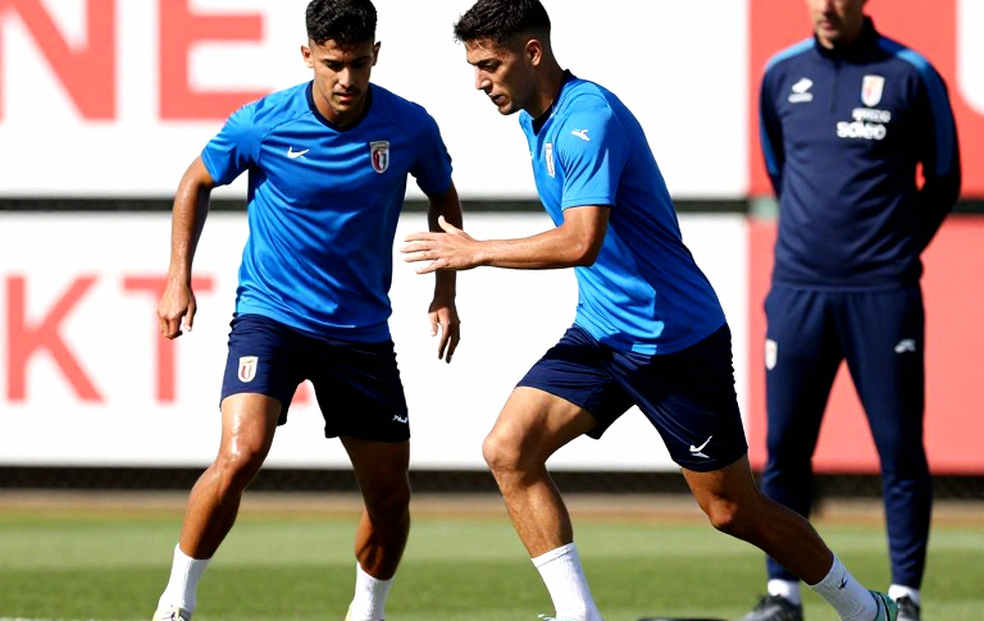
The real concern is not any single player but four injuries clustered in one bulletin. Raphinha's hamstring, Christensen's rectus femoris, De Jong's unclear status, Joan Garcia's return — together they signal overall squad fragility. Hamstring and quadriceps (rectus femoris) are the most recurrent muscle groups in football, so a rushed return raises re-injury risk. Christensen carries the highest recurrence risk, given the severity of the tear and a timeline of "a few more weeks." He is a ball-playing centre-back, so this is not a body-count loss but a structural loss to build-up from the back.
De Jong's status is evidence of conservative management. He is "with the group" but not "close to medical clearance" — typically the pattern of a phased reintegration, meaning a bench or substitute option in the near term, not a starter. Midfield control will dip in the meantime. Barcelona's medical staff are being careful here — keeping Christensen on an individual programme and easing De Jong back are both positive care-governance signals.
The goalkeeper situation is the one relative strength in this bulletin — but no conclusion should be drawn before the data is verified. Four names appear: Joan Garcia, Livakovic, Szczesny, Bonfill. Livakovic started the last league round, while Joan Garcia edged "closer to returning to the starting line-up." But the claim that all four sit at one club does not align cleanly with publicly known squad compositions — treat it as data to be verified, and treat any goalkeeper-rotation conclusion as low-confidence. Bonfill's call-up is a squad-number formality, not a crisis signal — a small but real example of the La Masia pipeline supplying emergency depth.
The quietest signal here is positional. Four senior goalkeepers at one club means wage and registration resources concentrated in a single position — a sign of inefficient allocation. In the football market, keeper prices often rise for distribution, not for shot-stopping basics; choosing the true No.1 out of this crowd is therefore a strategic call for Flick, not merely rotation. And what the headline does not say: squad fragility of this kind usually increases January-window pressure for defensive or cover recruitment.
The break cuts both ways. For some (Joan Garcia) it is recovery time; for everyone it is rustiness and reintegration risk. A weakened attack plus a post-break fixture equals the classic dropped-points equation. Fixture congestion — a multi-competition calendar — inflates the cost of these absences further. Getafe typically press high with a low block and physical duels, so the missing creative winger will be more visible against them.
Contrarian Angle
What critics miss: what the headline calls a "blow" is really a blend of two different things — genuine squad fragility, and a media frame. Injury news at a club like Barcelona draws far more engagement than its sporting magnitude warrants, because of giant-club narrative gravity. But the largest caveat is source quality: the decision to rule Raphinha out came from a club-adjacent outlet, and phrases like "likely," "closer" and "a few more weeks" are Goal.com editorial projections, not confirmations. What fan media is turning into a "crisis," the paperwork still calls an "absence" — the distinction matters. And do not forget the market view of an expected win is probably a touch too optimistic: a missing right-flank creator plus post-break rust together create a small but real dropped-points surprise. This is not a rumour. This is a receipt — every line in the bulletin is a claim, and every claim wants verification.
Takeaway
The verdict will come from the official squad list, not the headline. Before the Getafe match, watch two things: when Raphinha and Christensen return to group training, and who becomes the goalkeeper's No.1. Recurrence risk is the biggest signal — hamstrings and quadriceps do not lie. Until those two answers arrive, Barcelona's "blow" is really an open file — and no verdict is written in an open file.